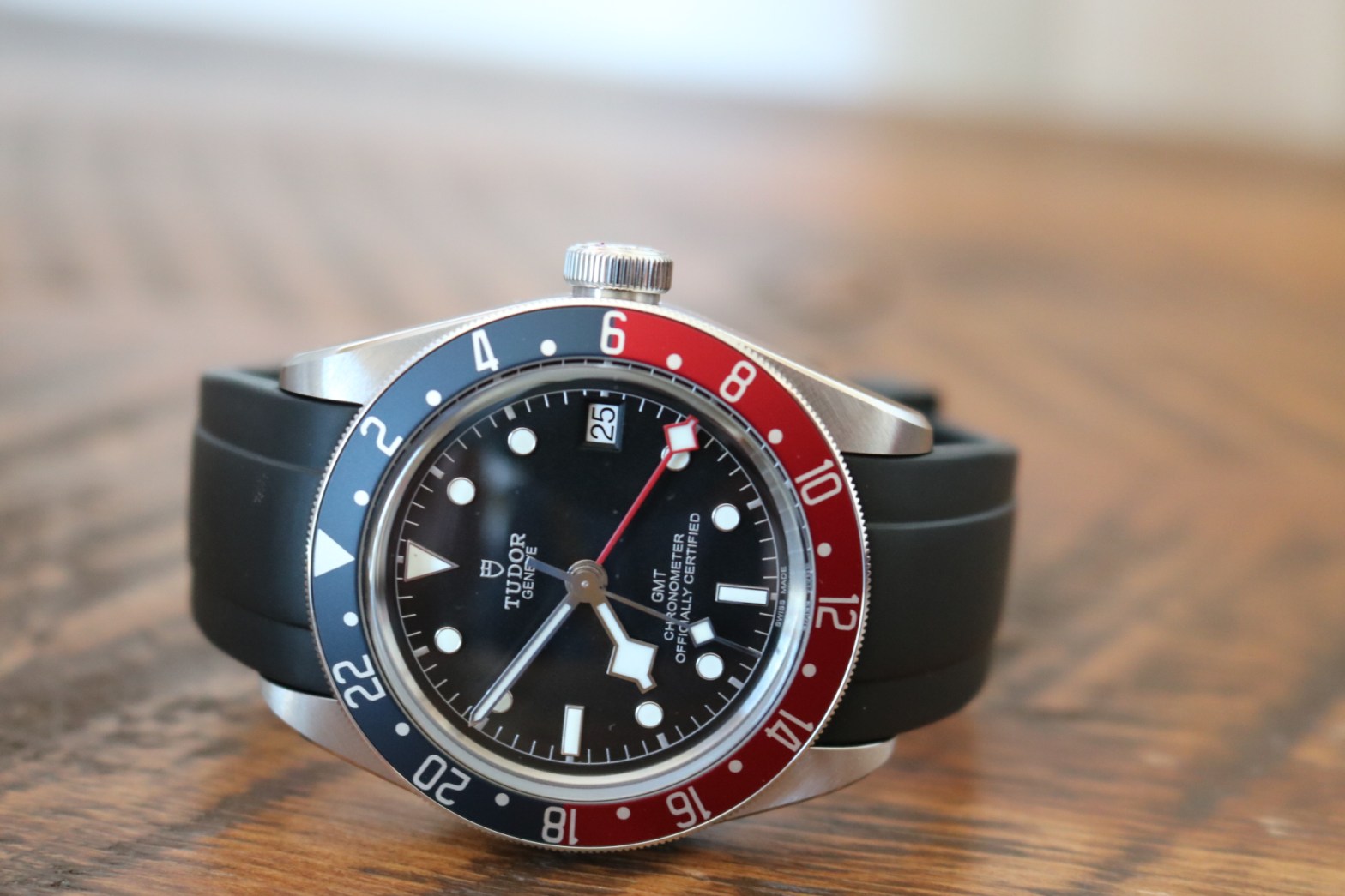
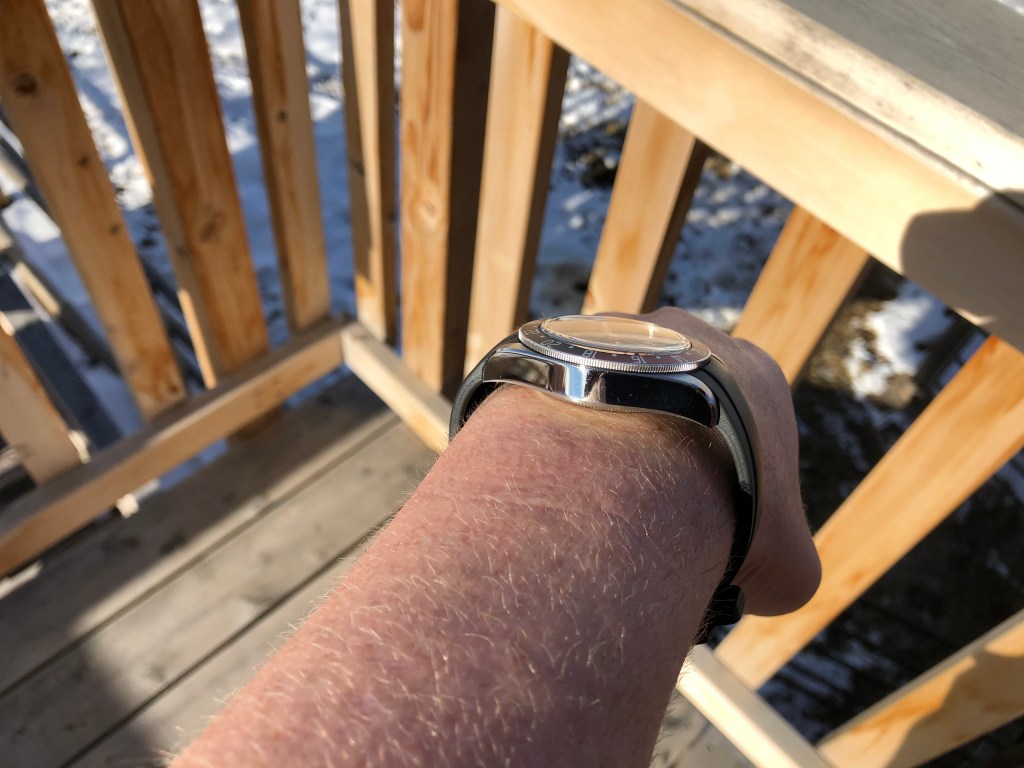
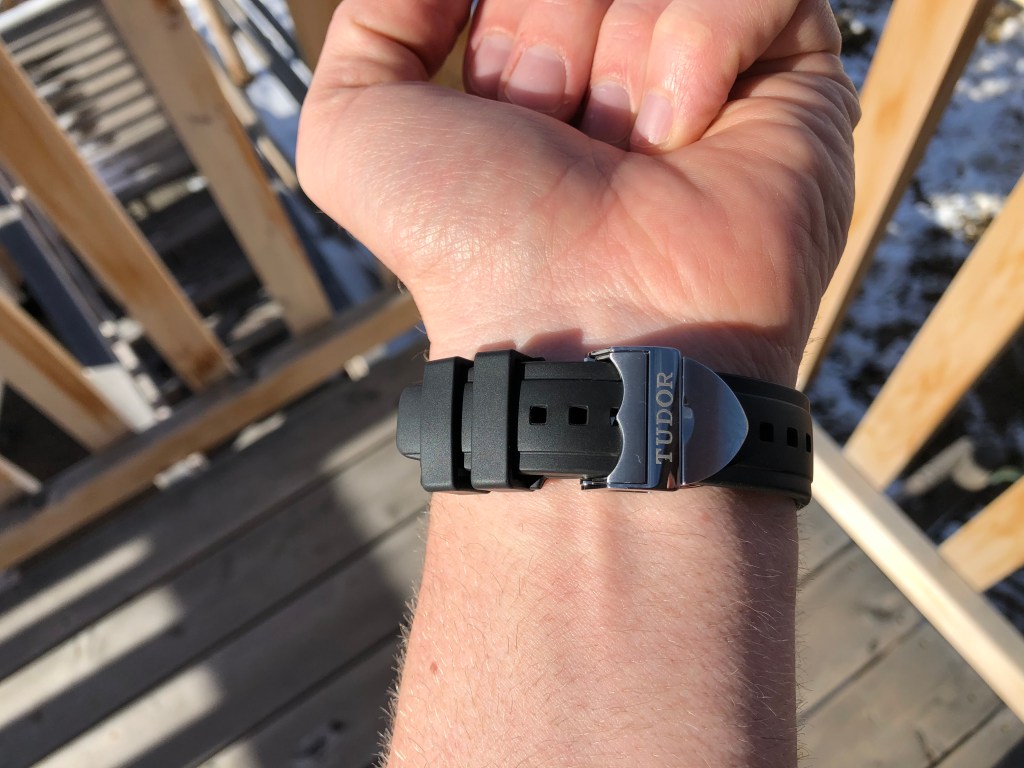
As I write this, I am wearing the GMT on an Everest rubber strap with the Tudor deployant installed. It feels just like the Black Bay 41 I reviewed last year: hefty, thick, and solid. It is not uncomfortable, nor is it too much for my 7.25” wrist; it isn’t exactly comfortable, either. The watch straddles the line between being too large to be worn all day, but not enough so that I wouldn’t wear it. That being said, next to the 36mm Oyster Perpetual I have been wearing, the discomfort is more pronounced.
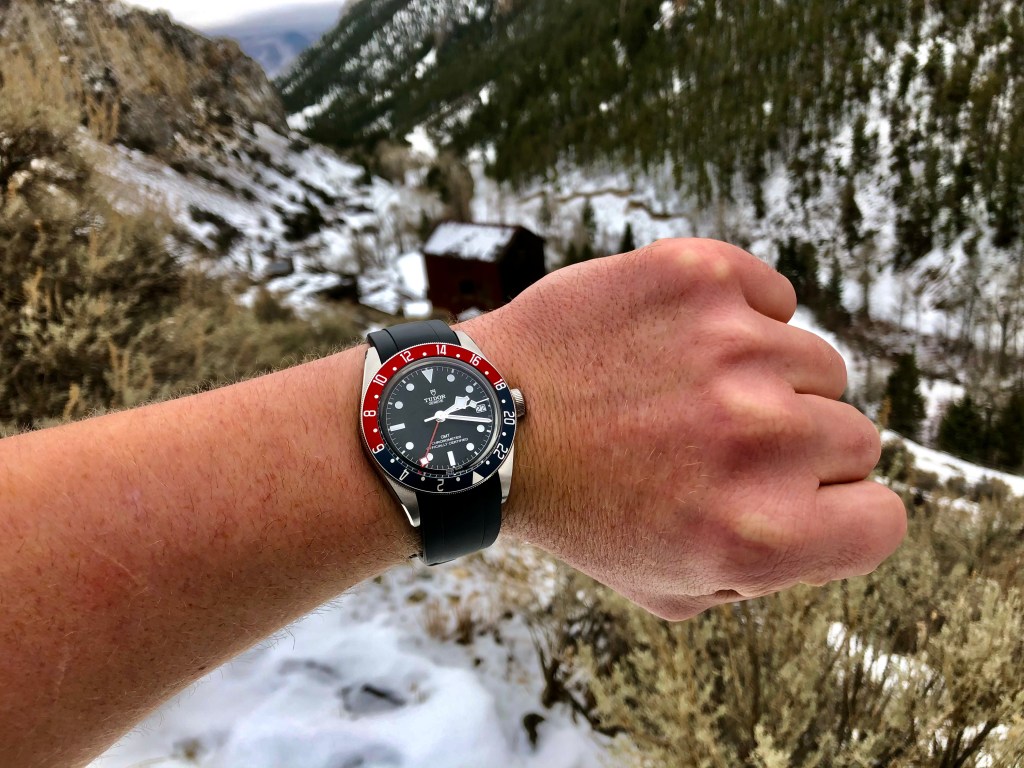
I never truly realized how large my last Tudor Black Bay was because I had nothing else with which to compare. Now, I can understand some of the complaining by those who wish watch companies made watches which were thinner and smaller in diameter.
Yes, I completely understand Tudor makes the Black Bay 58 (I even own one, although my father has claimed it as his own so I haven’t been able to spend a lot of time with it), but it does not come with a GMT function, at least not yet (what a cool watch that would be…).
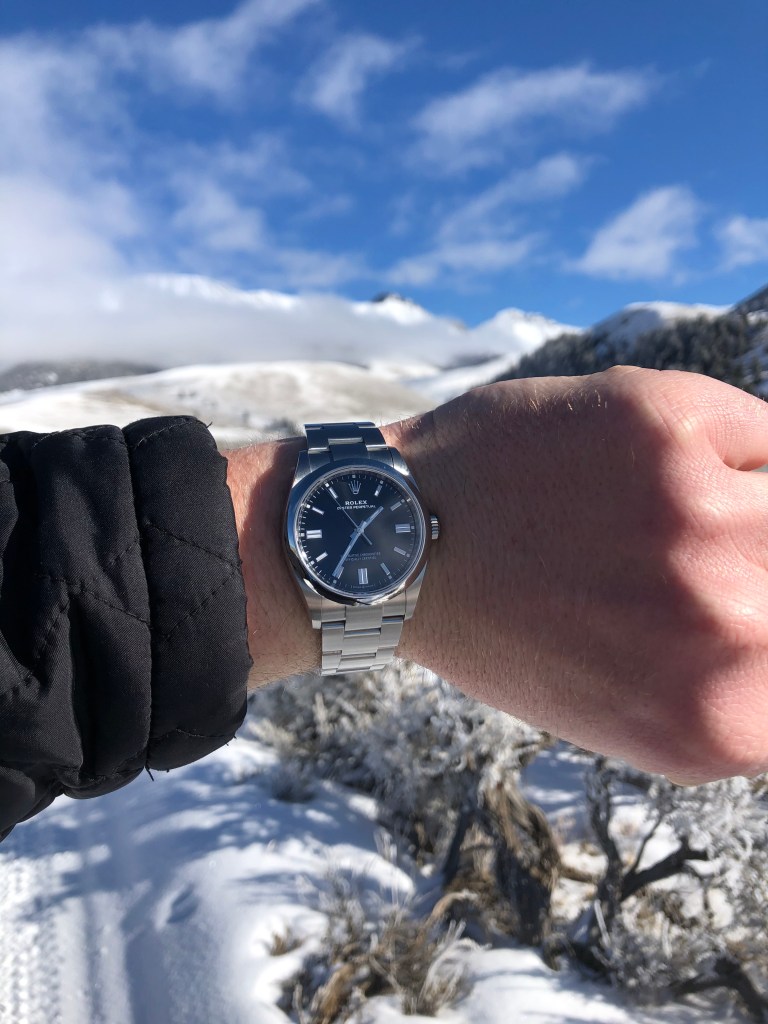
I must take back the varying comments I have made about those who refuse to wear watches which are larger than 39mm: I understand what they are saying, especially after swapping the 36mm Rolex OP out for the 41mm Tudor GMT. Regardless of the wonderful aesthetic of this piece, when it comes time to grab a watch in the morning, I find it nearly impossible to chose the GMT over the smaller Rolex. Not because the OP is a Rolex and the GMT is a Tudor, but because one is far more comfortable to wear.
The gap in comfort between the two models becomes even more pronounced when I wear the watch with a jacket and gloves when hiking. The ability the smaller watch has to slip underneath the sleeve and my glove at the same time allows for a more comfortable experience and it helps to keep the cold out. All said, I do not think I will keep this watch…
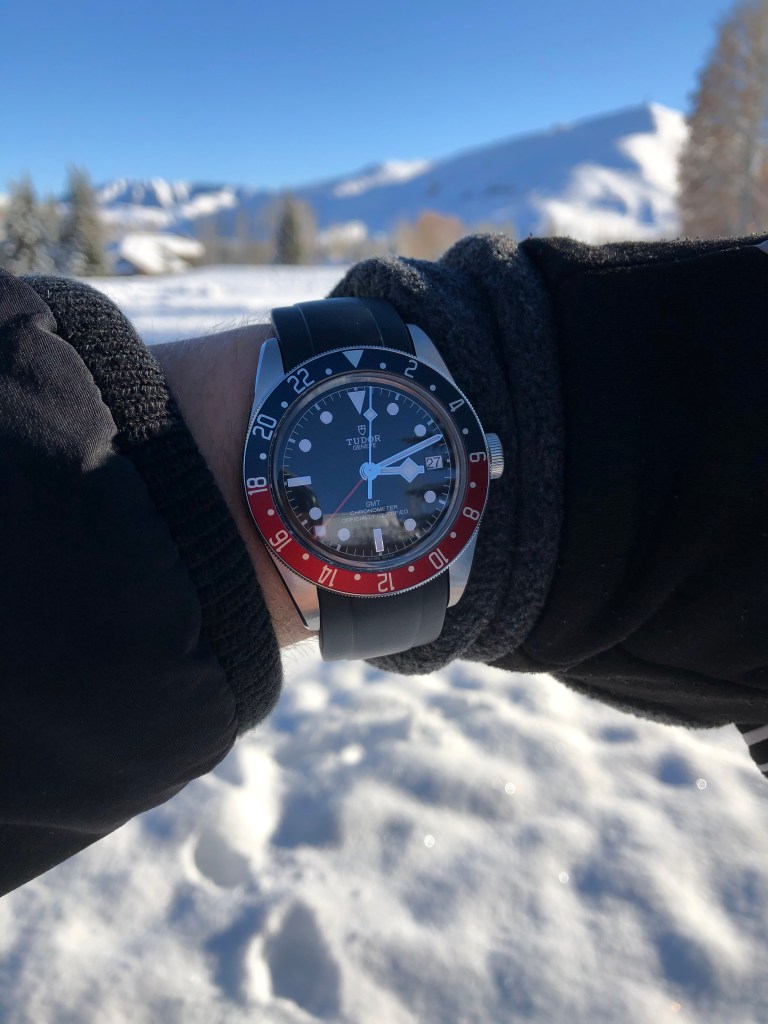
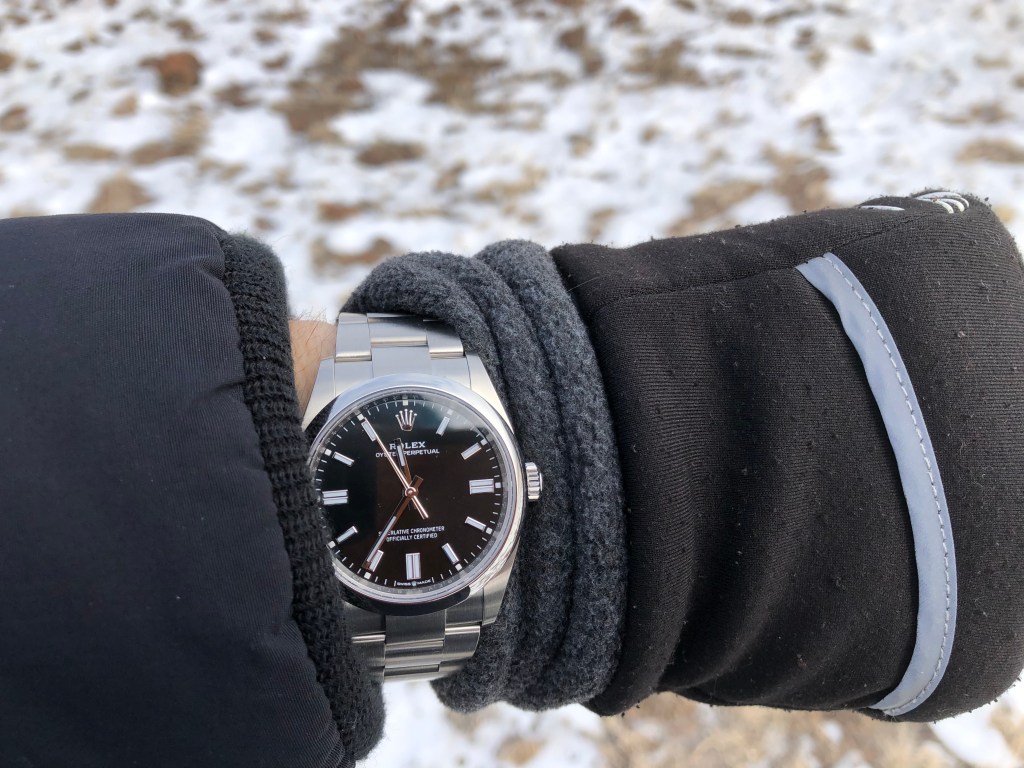
At least that was how I felt when I first picked up the GMT, before I was able to spend some time with it away from my other watches. Much of my view on it has changed over the past month, as I have worn it hiking and exploring over the wintery terrain.
Even without the hype, the Tudor BB GMT is worth considering due to its uniqueness, accuracy, and function. Tudor has created a GMT which perfroms as well as any other GMT watch on the market, regardless of price, and is working to set a new standard when it comes to creating watches that comfortably occupy space reserved for more expensive watches. Furthermore, they are doing a great job at filling the void left by the almost non-existent retail market Rolex GMT Master-II with a watch that performs just as well, with the same function and accuracy, and a very similar aesthetic.
Comfort wise, when compared to a completely different watch, this watch performs really well and is comfortable when worn with the Everest rubber strap. There is no way I could ever say they watch disappears, but it becomes less noticeable very quickly after putting it on.
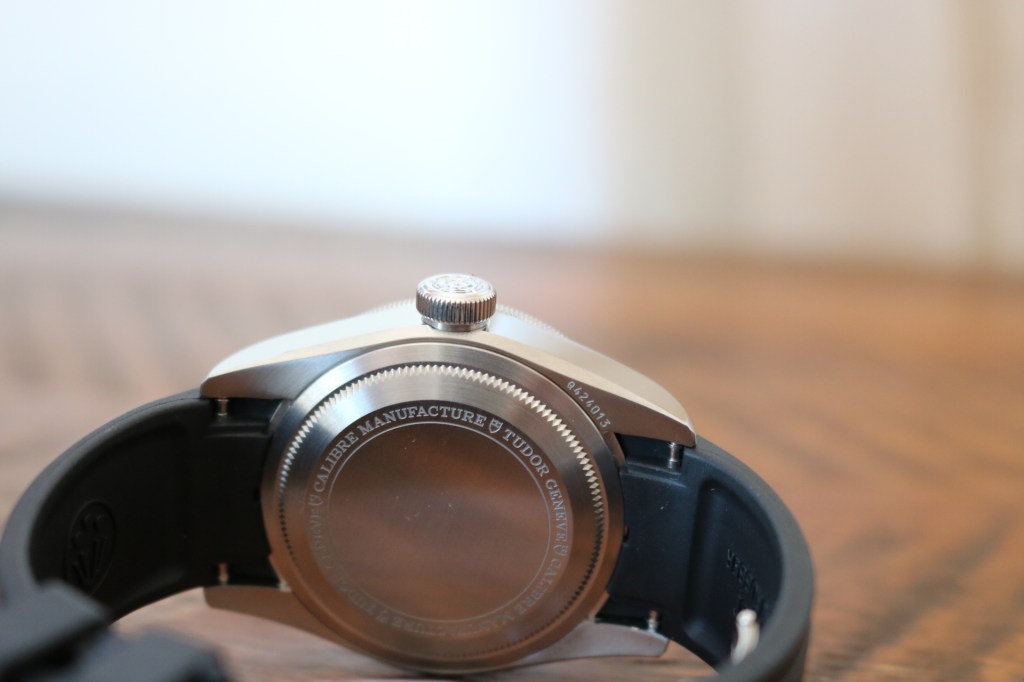
Timekeeping is really impressive at about 1.5 seconds fast per day, every day. The power reserve is around 70 hours according to my tests, and the function of the GMT complication is great. I have only used it to go from Mountain Time to Pacific Time, but it performed well for that simple one-hour adjustment.
The jumping hour hand is one of my favorite features, something my old Omega had, and it is something I wish more movements would come with, GMT or not. The crown is easy to use, I love the large size Tudor is using with all the BB Heritage and GMT models.
Legibility is very good even in the low light of a snowy Idaho January. I have yet had trouble reading the time at a glance and the lume is very bright in low-light situations. I enjoy the matte dial and the non-gilt markers and hands. The bezel is classic blue and red, looking perfect with most mountain-person outfits.
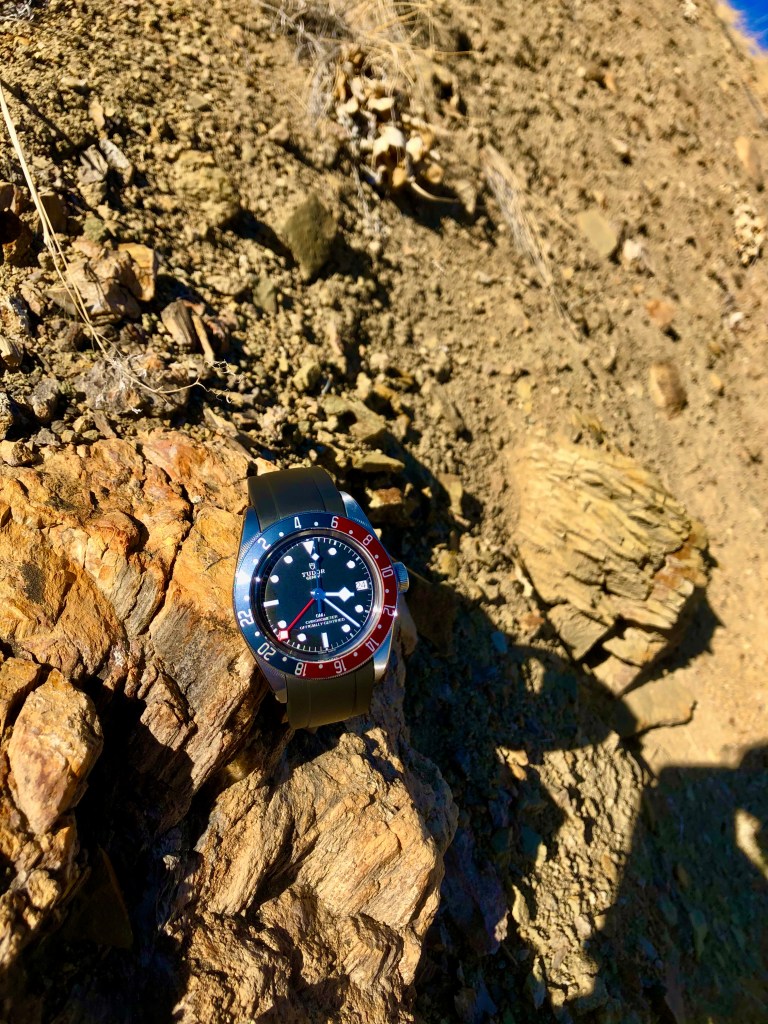
The bezel is perfect for tracking multiple time-zones and can also be used to track hike time. To track elapsed time, I rotate the bezel and set the 24-hour mark on the minute hand when I start the hike and use the numerals and the dots in between them to track elapsed time. The distance between one numeral to the next is exactly five minutes, and the dots cut that in half, or 2.5 minutes. To track elapsed time, I look at the numeral the second hand is on, divide it by two and then multiply it by five to get my elapsed time. For example, if the minute hand has moved to the 6, I will divide that by two to get 3 and then multiply it by five to get fifteen. After some practice, it is really easy to know when the minute hand gets to 6, I have been out for fifteen minutes. When it gets to 12, I have been out for thirty and so on and on. Is this as easy as a dive bezel? No, but it works well, and it allows the watch to be used for even more than just a GMT travel watch.
I have not worn the watch with the leather strap. As soon as I picked the watch up at my AD, I took the leather strap off and put the Everest strap on. I have no plan on trying the leather strap anytime soon since I sweat so much it will get destroyed outside in the dirt.
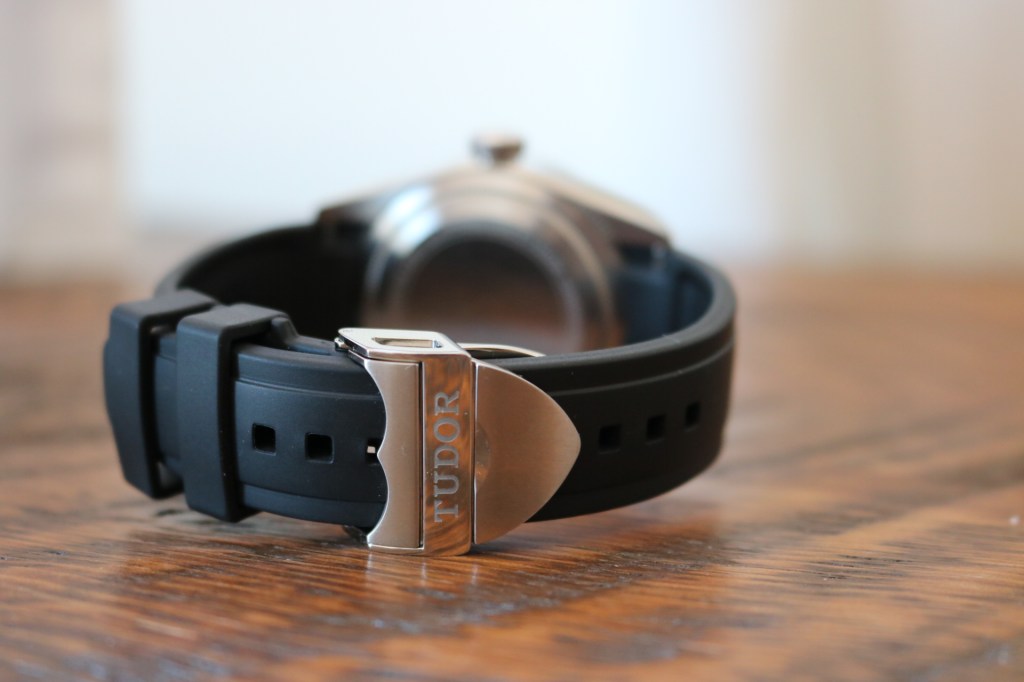
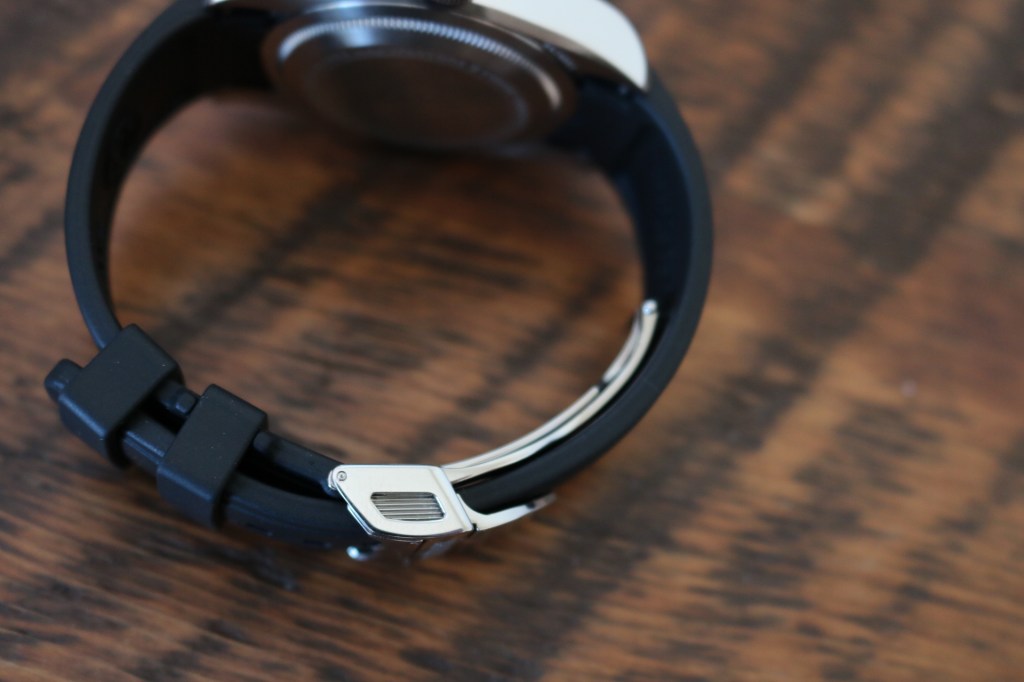
I am not as smitten with this watch as I had hoped to be. Much of that is probably due to receiving the Rolex at the same time. However, when the time comes for some more strenuous hikes or explorations, I feel the Tudor BB GMT will be better suited to that environment than the Rolex OP. I am becoming enamored with the watch as I wear it more; time will tell if this will stay in my collection or gets sold. All in all, despite the hype, this is a fantastic watch worth considering for so many uses.
 EscapementSV