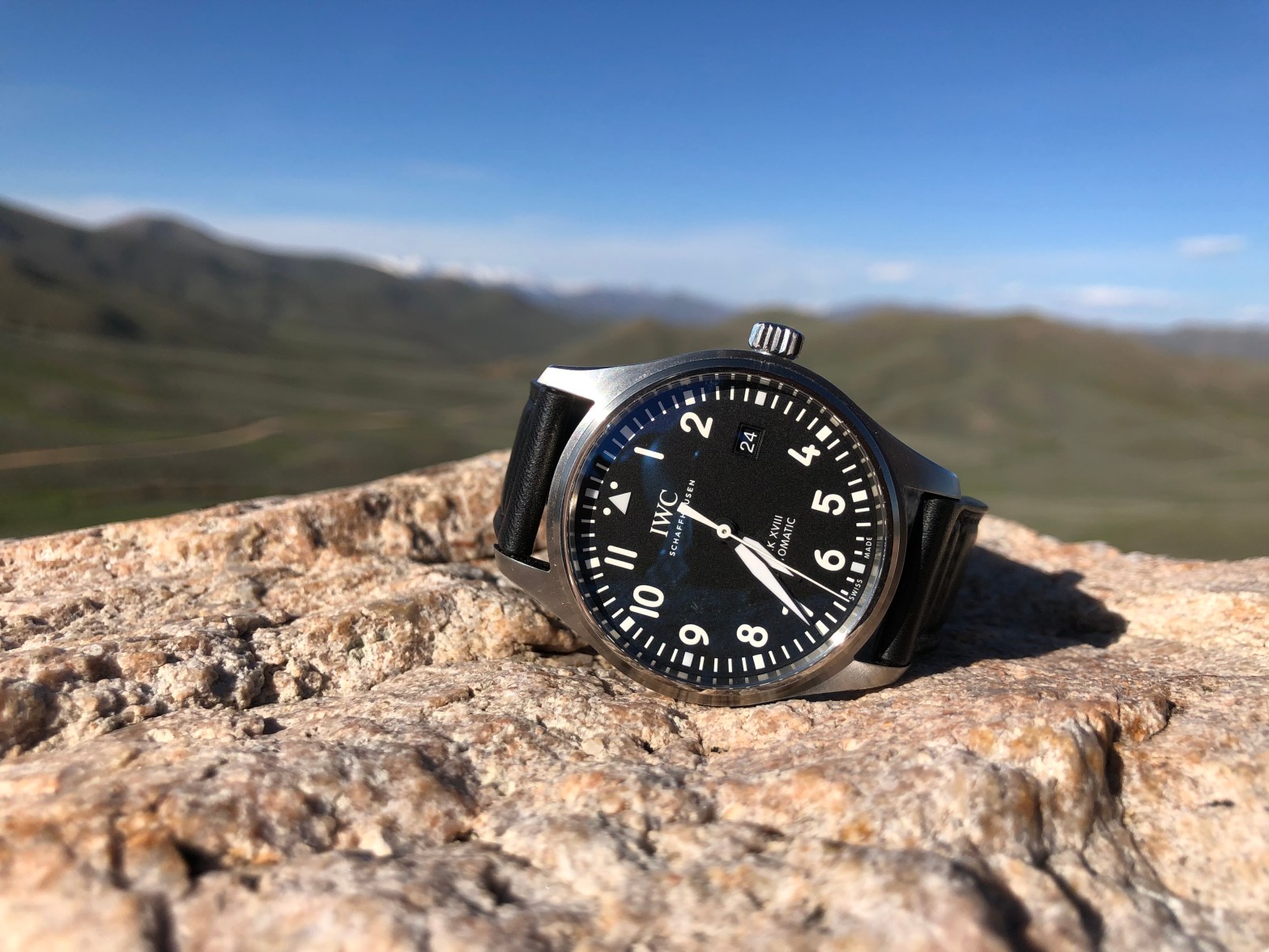
In the past, I have made no secret of the enjoyment I receive from IWC pilot’s watches. I appreciate their aesthetic, lack of flash (mostly), and ability to fly under the radar (pun intended); they are well-made and beautiful in their unique way. IWC is often a great choice when choosing a watch: no hype, no games, over-priced, but worth the lack of baggage that Rolex or Omega have. Yes, IWC has been hiking their prices lately, but they can still be bought reasonably on the secondary market. Not all hope is lost if one is willing to look.
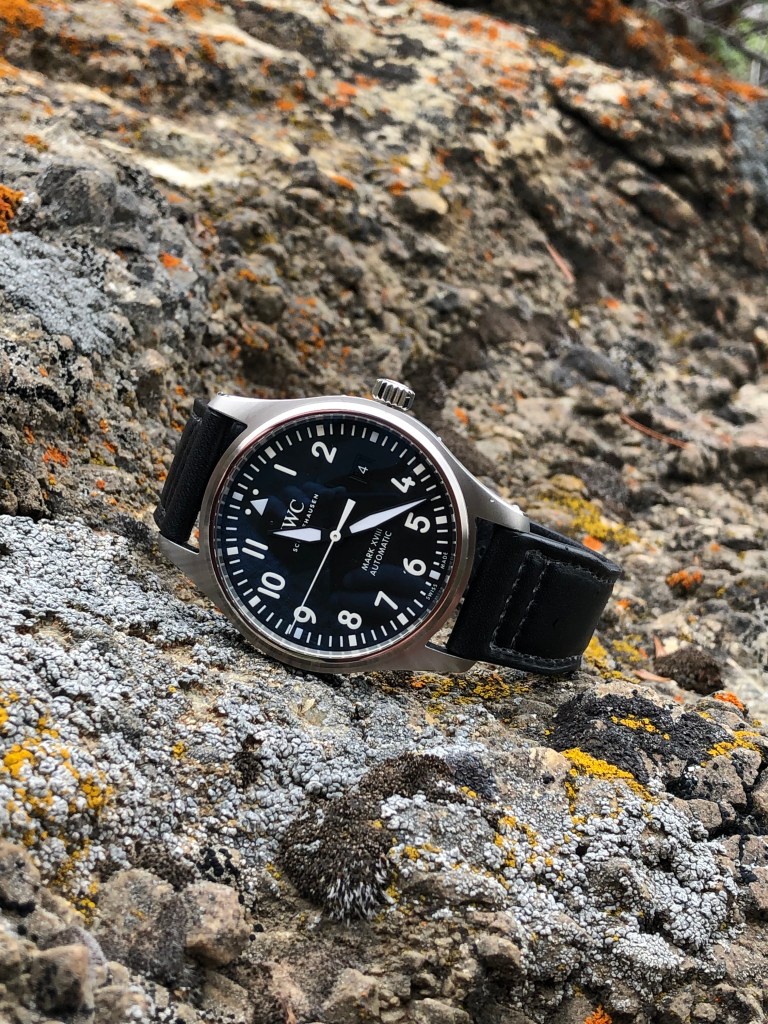
Nevertheless, when I heard rumors last year that the Mark XVIII would be discontinued and replaced with another watch with an IWC “manufacture” caliber, I knew I needed to get a Mark XVIII to test out for the long haul. While I understand they are marketed as a pilot’s watch, their design and execution make them perfect field watches. They are easy to read, have no frills or embellishments, and are easy to wear when being active. I wanted to see how it would compare to the new model, one people were so excited about. I like watches with Sellita or ETA (this Mark XVIII has a Sellita in it) calibers because they are easier to get serviced in remote places and seem reliably run.
There were a few Mark XVIIIs for sale at my local dealer, but the retail price was too high. Fortunately, I found one on the secondary market, and the gentleman who had it for sale was interested in trading it for a watch I had. We worked out a deal, and he shipped the watch to me. At that point, I had never tried a Mark XVIII on my wrist. All I could do was hope that the watch wore as well as I had heard; I waited patiently for it to come in the post.
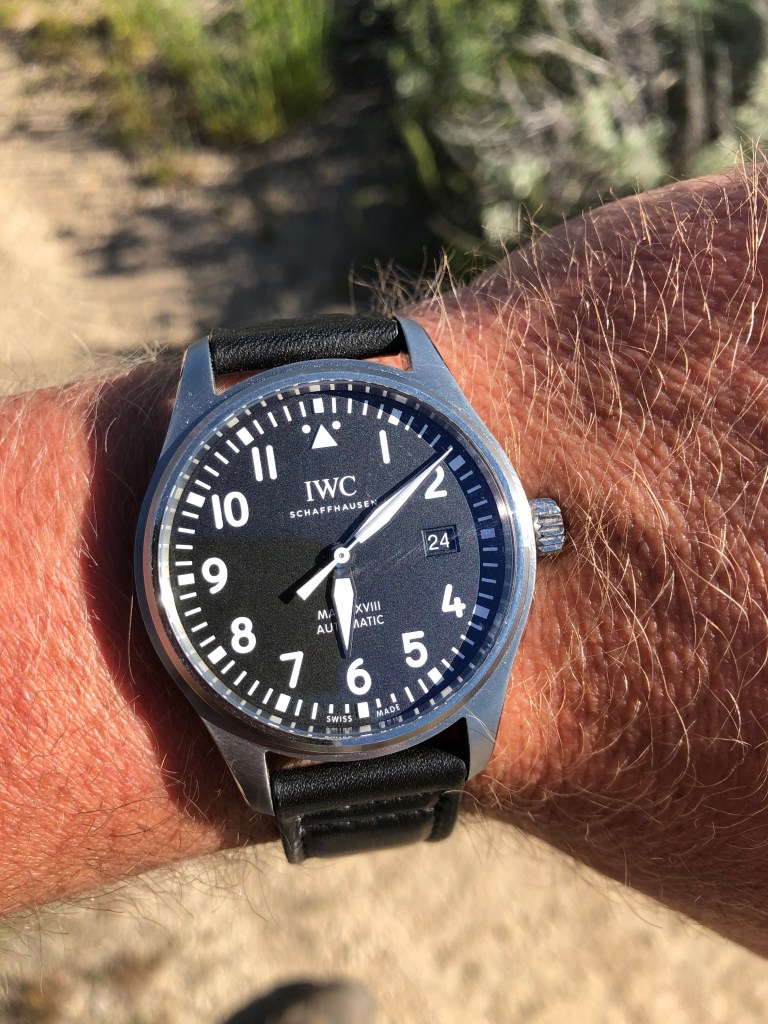
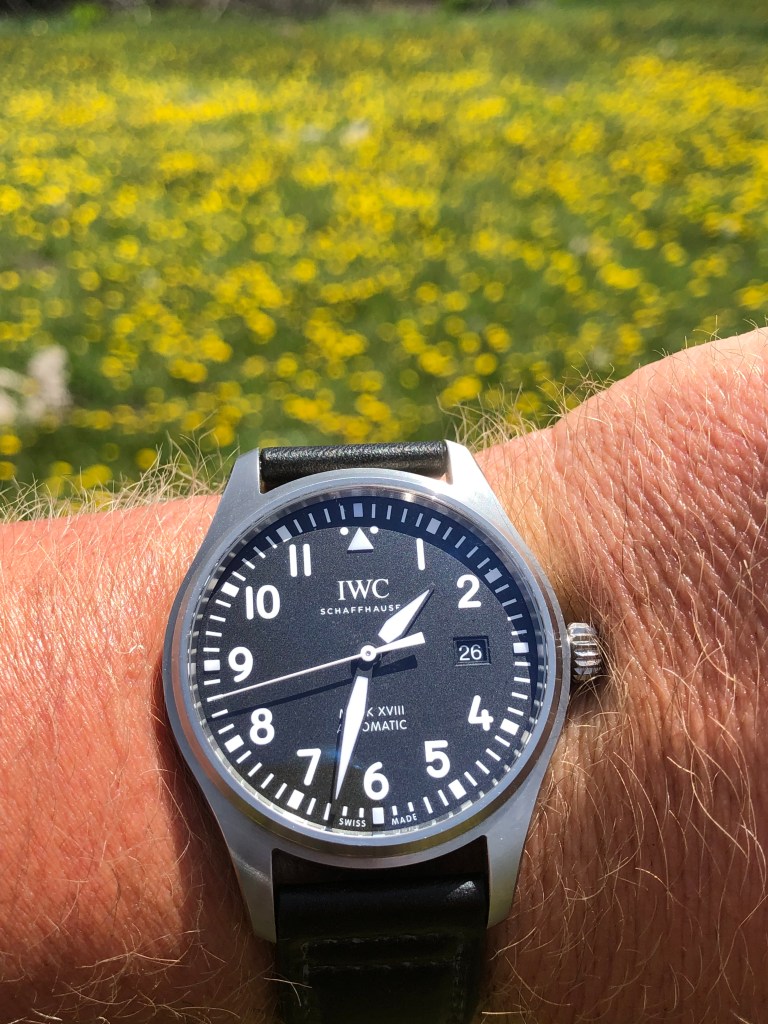
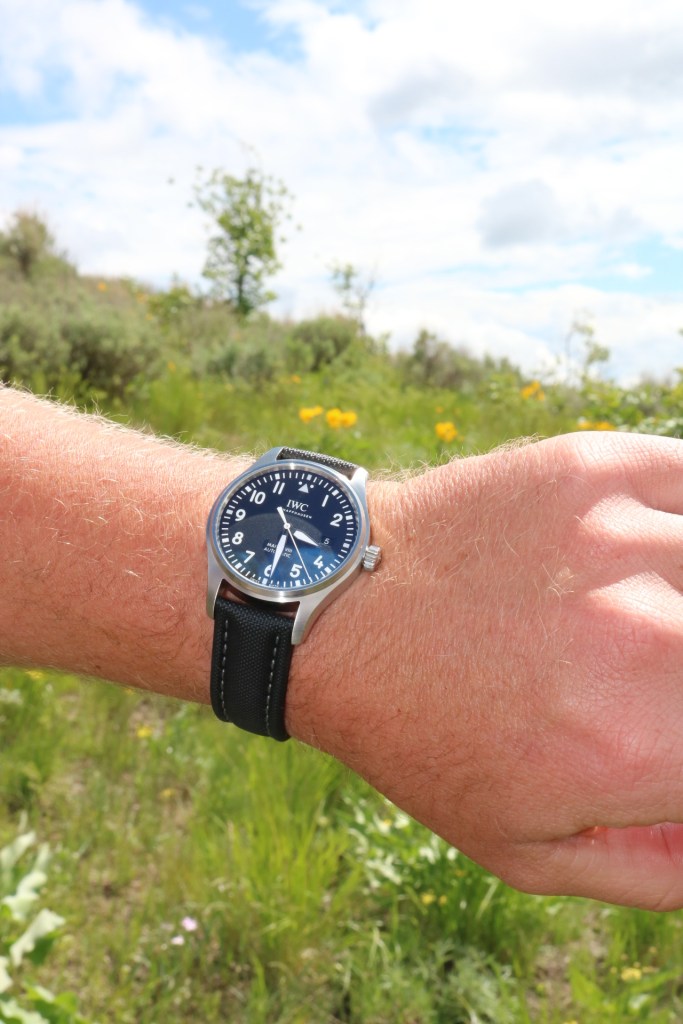
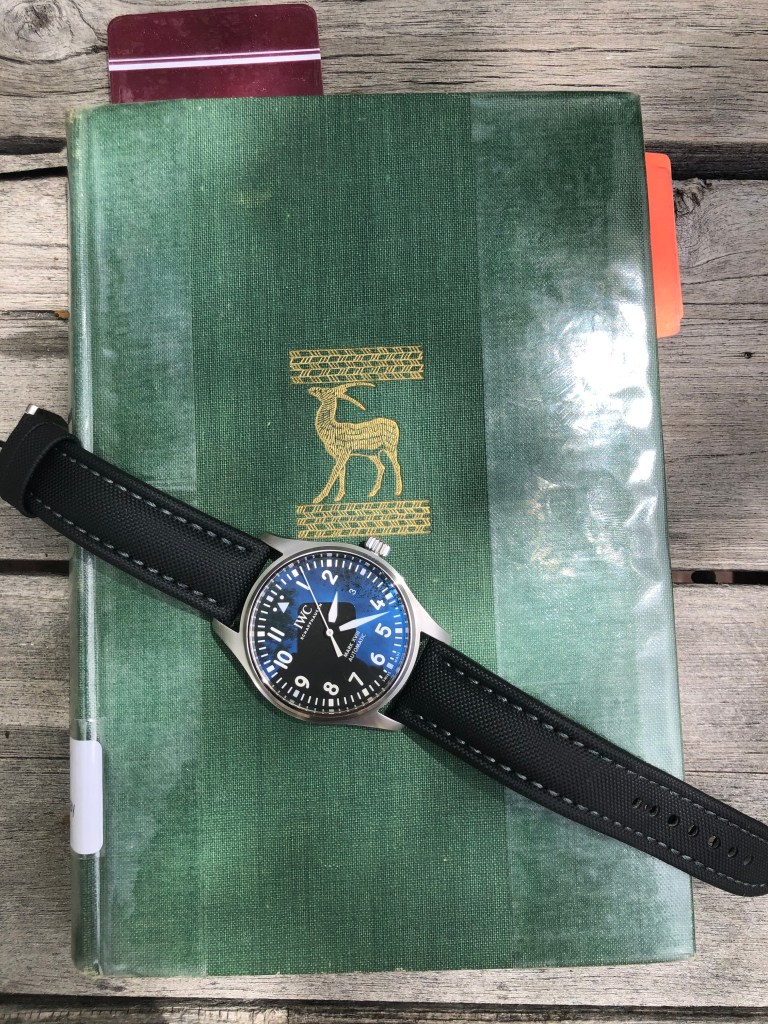
The watch arrived, and I was impressed with it overall. It was like-new and had been purchased from an AD only a few months before. It is a slim, lightweight, easy-to-wear watch with a nice leather strap. I put it on and noticed the somewhat longer lugs, yet they did not bother me. It still fits my wrist and is light and slim compared to my Top Gun Chrono. Deciding the best way to introduce the watch into the family was to take it on a hike that afternoon with my wife; we loaded our gear up and went out to one of the canyons near home. It was a hot day, sweaty and dusty, during the intermediate period between spring and summer; the hills were still green from our recent rain, and flowers were blooming in the meadows despite the heat. The sun was relentless, though, and we were sweating soon after leaving the car.
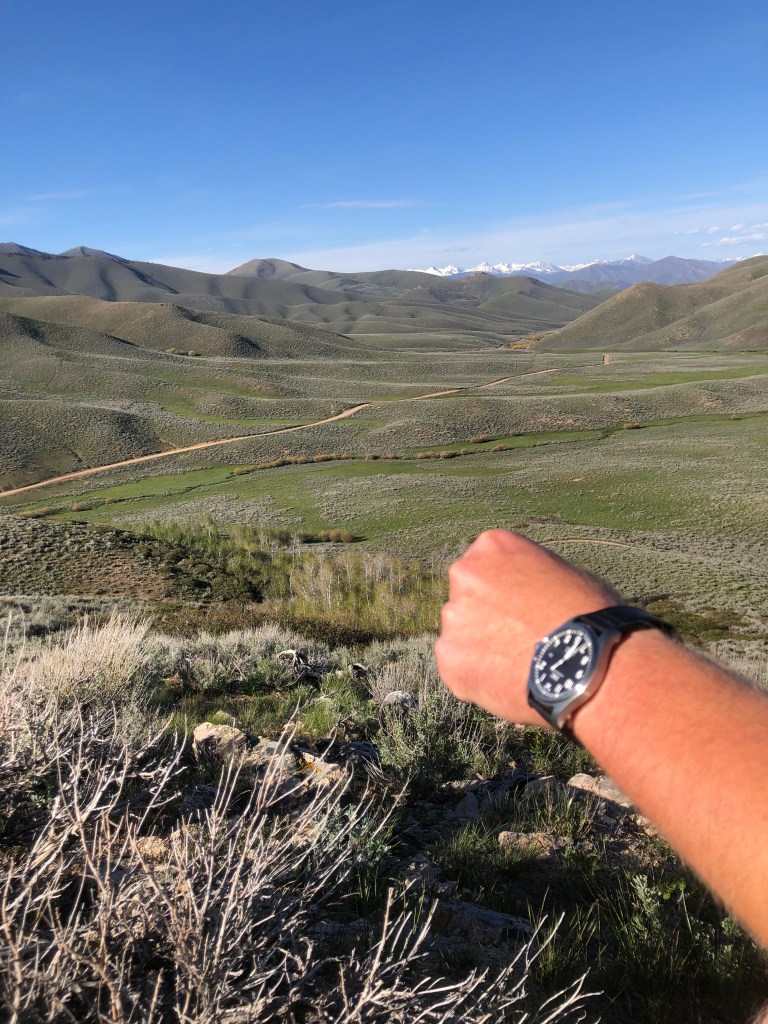
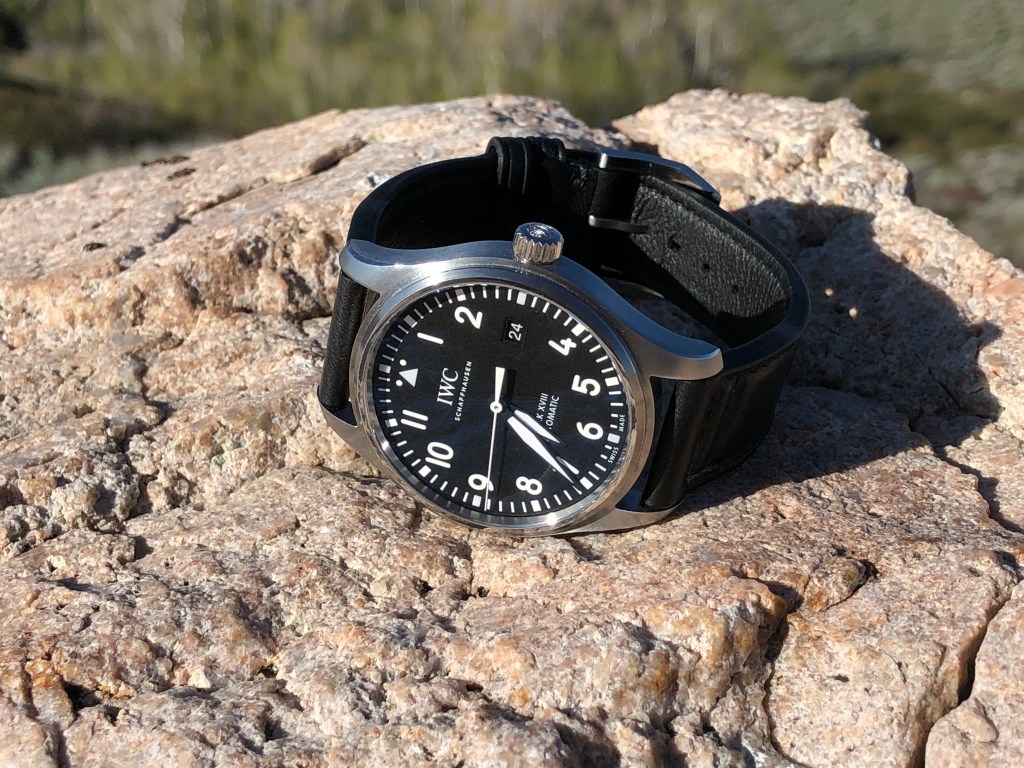
The watch worked great for the few hours we hiked (Why wouldn’t it?). The only issue I thought I might have as time went on was with the leather strap. It was soaked through within an hour, and dust and dirt were sticking to it. The conventional wisdom around leather straps is that they do not stand up well to this type of use. I figured I would get a few months out of it and then have to move on to something else (I was wrong). Regardless, it was comfortable, and few watches are as easy to read at a glance as an IWC pilot’s watch. It is difficult not to enjoy looking down and catching the time with only a slight look out of the corner of my eye. We took a few photos of the watch, some of the mountains, and the animals, shot our rifles a little, and called it a night. As we walked through the dust back to our car, I was already planning my next trip with the watch. I had the perfect one in mind, and I hoped it was still early enough in the year to enjoy it.
A month or so before, I discovered a mining area about twenty miles from my home. I had been out on my own one afternoon stumbling through the desert hills on a vain search for an old trail I thought existed but didn’t. As I returned to my car, along a ridge between two large mountains and a narrow canyon that winds off into the distance, I saw a spur that branched off and walked down it, hoping it would be an easier route back to my car. It wasn’t. However, it did reveal an area I had never seen before. A place where a stream rose from the sagebrush and large cottonwoods grew on its banks. Rising from the site where the stream emerged was a hill, and this hill was covered with old mining trails and shafts. Near the bottom was the largest mining area, nearly five hundred feet long and constructed on leveled-out heaps of waste rock from the mine itself. There were narrow-gauge ore cart tracks sticking out of the hillsides. I couldn’t believe it. Too tired to explore it much that day, I vowed to return and explore it further. The Mark XVIII would come with me, I decided, when it was time to explore this place again.
My trip was delayed at first because I learned that the site is on private land (there are no markings on the property. I heard this from a cattle rancher I ran into one day while hiking nearby), and I had to find the owners and receive permission to explore their land. Fortunately, they were very excited to have me out there, and if I picked up my trash and didn’t damage their property, I could go out whenever I wanted.
This place is unique because I could not get within five miles of the little stream I stumbled on in a vehicle. One must do these miles on foot, approaching from the southeast through basalt volcanic flows, open fields, barren hills, and exposed rain-washed roads. Being at the fringes of the mountains along their border with the flat desert plain that extends for miles to the south, it is imperative to time any trip out there when the weather is cool.
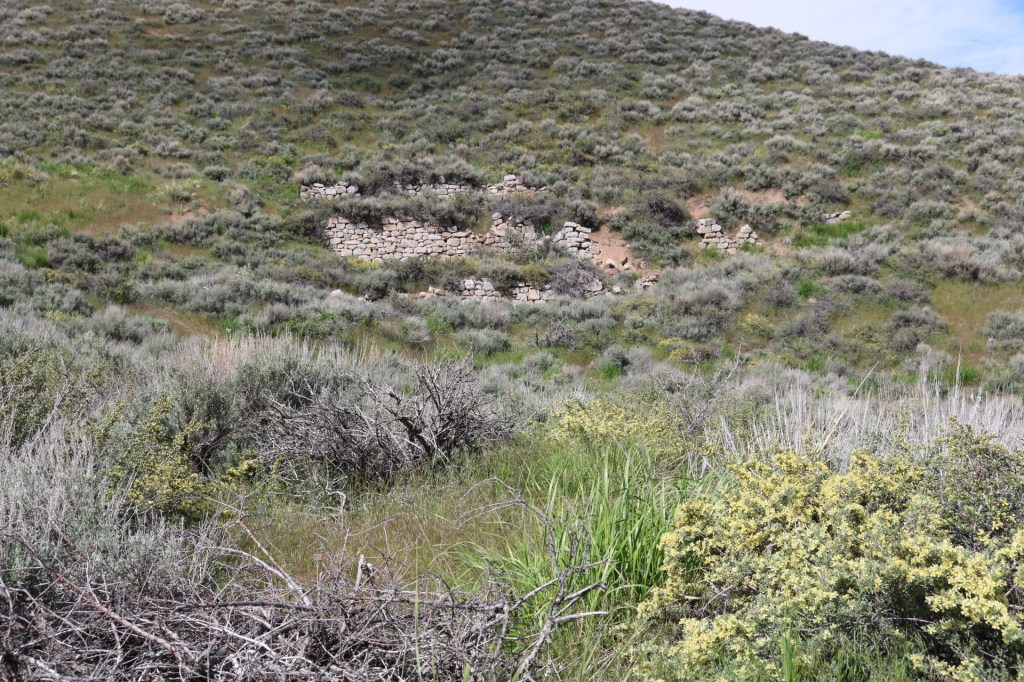
As a result, very few, if any, people take the time to go out and explore, and the site remains relatively well preserved. It was spring when I found the site, and it had been rainy and cool, with water in the creeks to refill my bottles. It was a race against the clock to get out before all the water dried up and the sun would be too harsh to do much work. We were hit with hot weather after I took the IWC out for its first hike, and I had to wait until it cooled down sufficiently. I waited for a day when the forecast predicted it would not get over eighty-five degrees and left as early as possible.
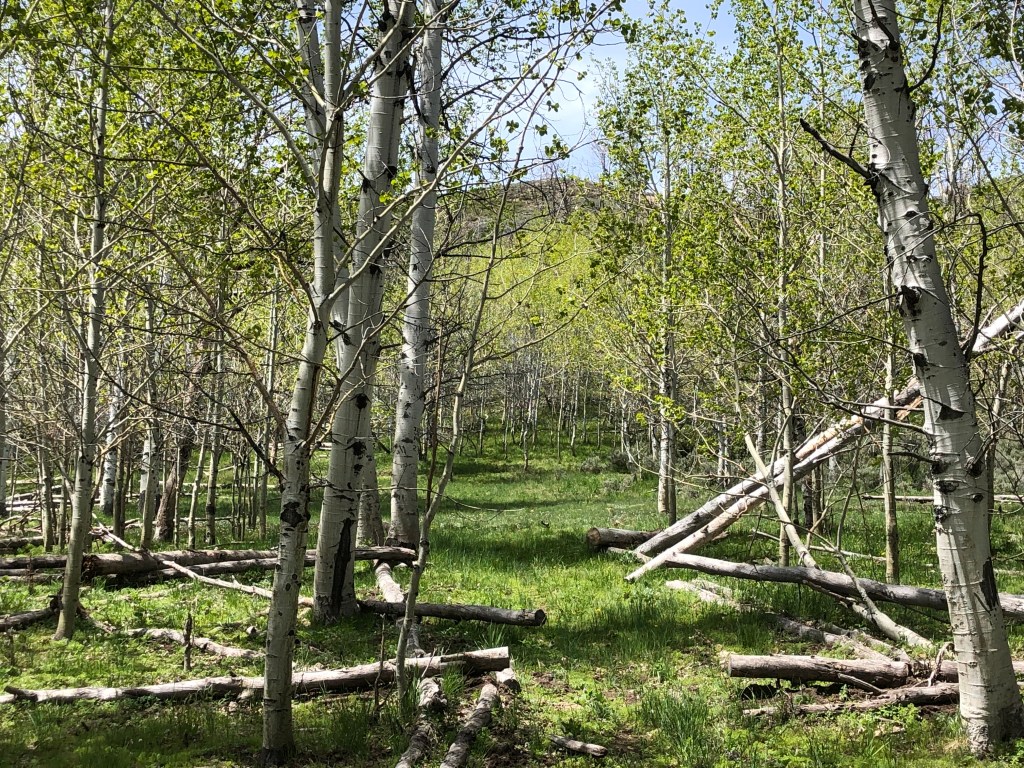
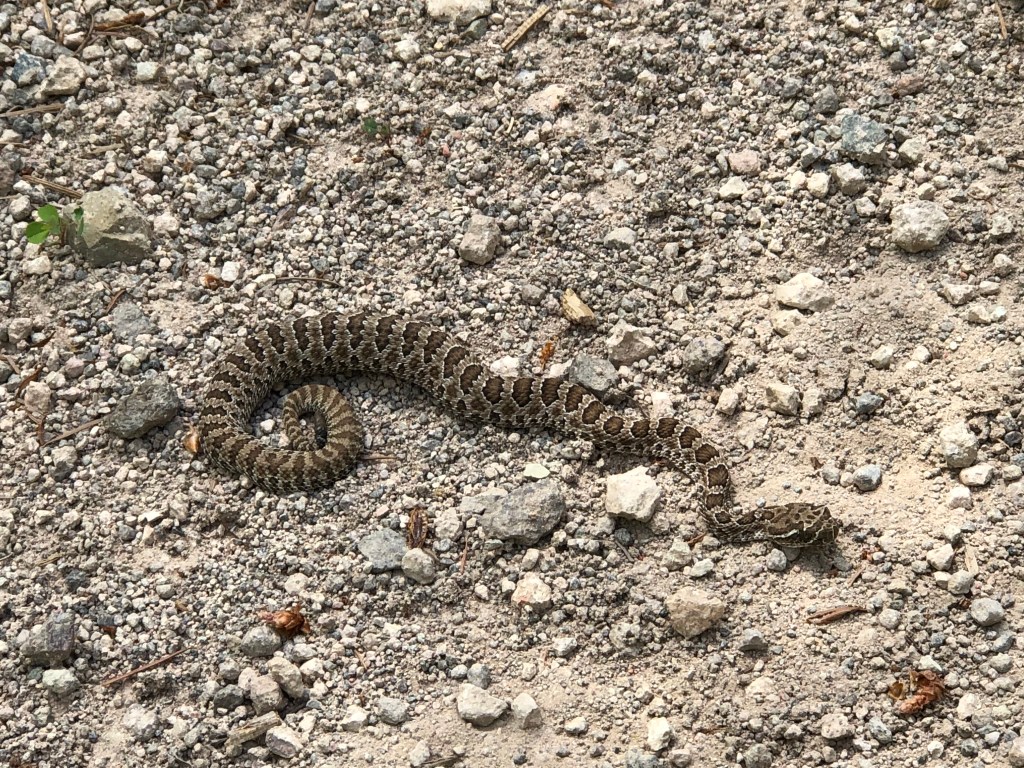
Making the walk is like traveling through a mixture of landscape paintings. The colors range from the grey and red of volcanic rock to the tan of desert sands and the white, black, and pink of the decaying granite. Some trees sit on the verge of intermittent streams that do not survive the heat of summer, and the grass and flowers die early on. Horned lizards are common, as well as rattlesnakes and badgers. Deer and elk are there in the spring. The approach is all uphill, and one gains decent elevation. It is a beautiful bastard of a place to walk through in the summer heat.
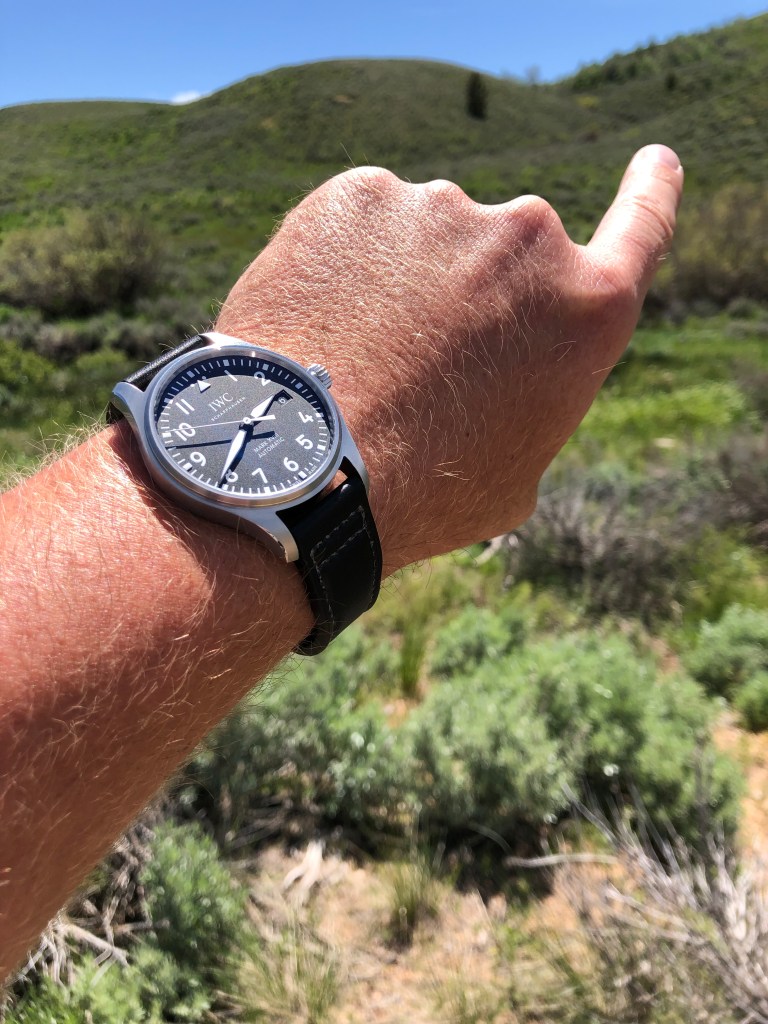
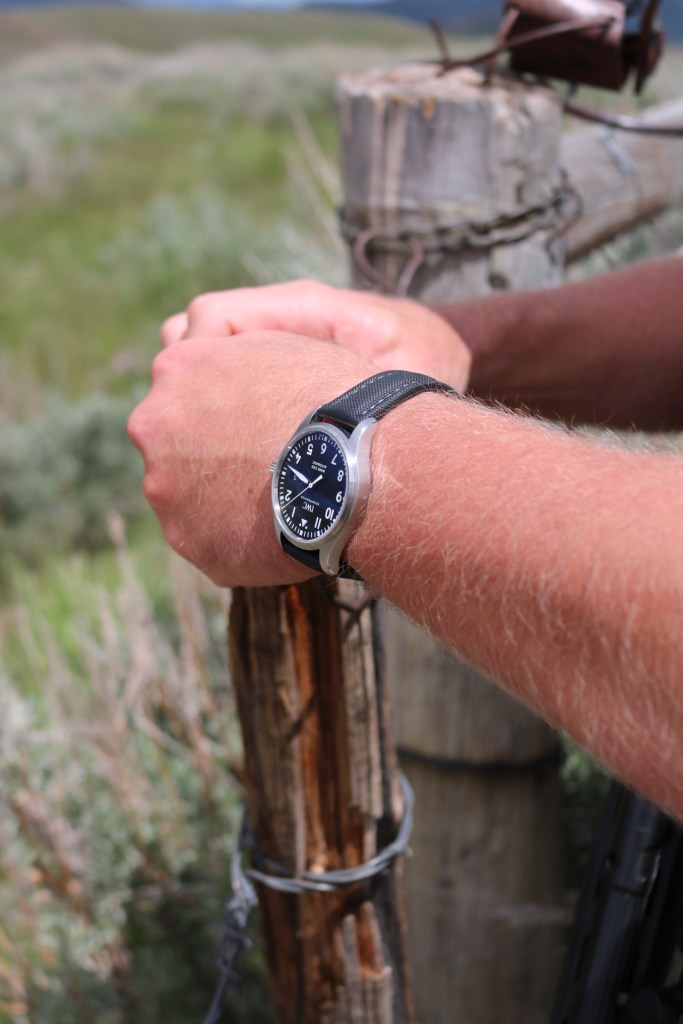
Upon arriving back at the little stream, I checked the time on the IWC to see how long it had taken me (1.5 hours) and moved it around my wrist to see how it was coping with my sweat. I have noticed that nearly all watches wiggle around my wrist when I sweat, but this one did not. Perhaps it is the longer lugs or the strap. Whatever it was, it was nice not to have it rolling around. It was also nice that I did not need to wear it so tight that it hurt to stop it from moving around.
I could see mine shafts and paths everywhere; the entire hill covered them; they snaked their way around the spur and were punctuated by vertical shafts sunk into the ground and tunnels burrowing into the hillside. None of the areas was reclaimed greatly; old narrow-gauge tracks were sticking out of the hills, and large timber used in the mines was stacked off the road. I explored for a few hours and left, knowing it would take me a month to see everything contained within this ten-acre site.
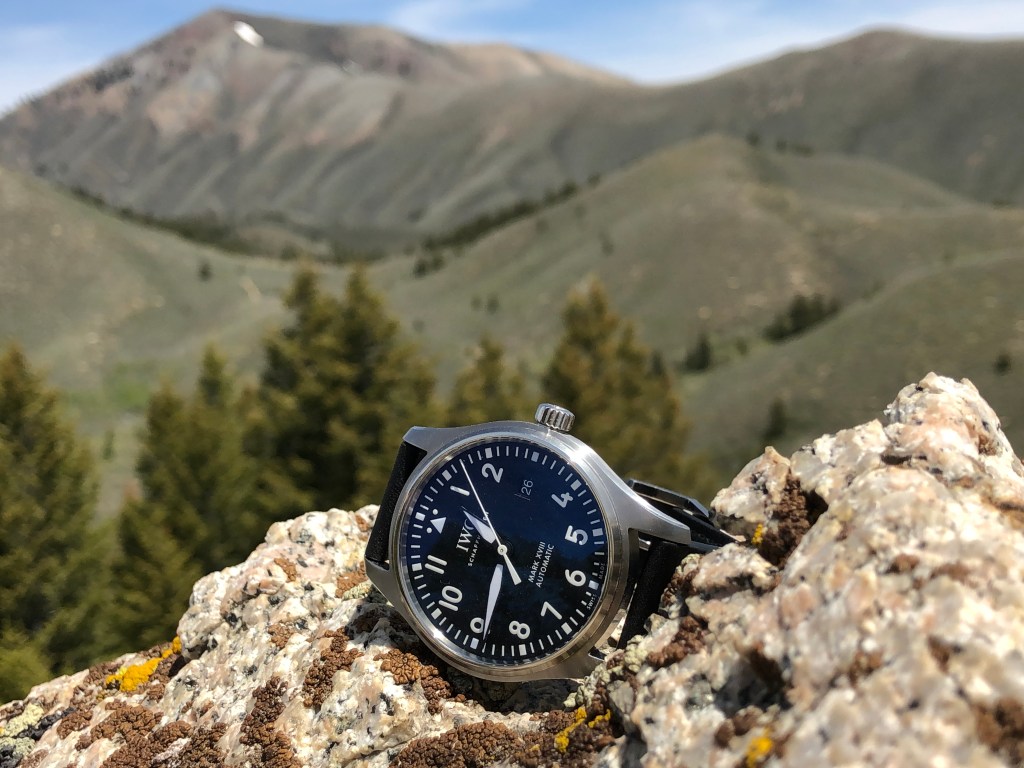
I used the IWC to track my walking time between the various parts of the site. I track my walks in these areas in one, two, five, ten, or twenty-minute intervals to estimate the distance I will walk and how much time I need to return. It is helpful to know roughly how long it will take to walk out of place, and it is also beneficial when leaving directions with my wife in case she needs to call search and rescue. I can text her my estimated location if I get stuck or leave it posted on the refrigerator at home so she has a reference each time I go out. It gives me peace of mind if I am hurt or have other issues. I can say, “Twenty minutes to the bend, fifteen minutes to the stream, twenty minutes to the canyon, twenty minutes to the car.” This knowledge can be a critical morale booster when hurt, tired, or dehydrated.
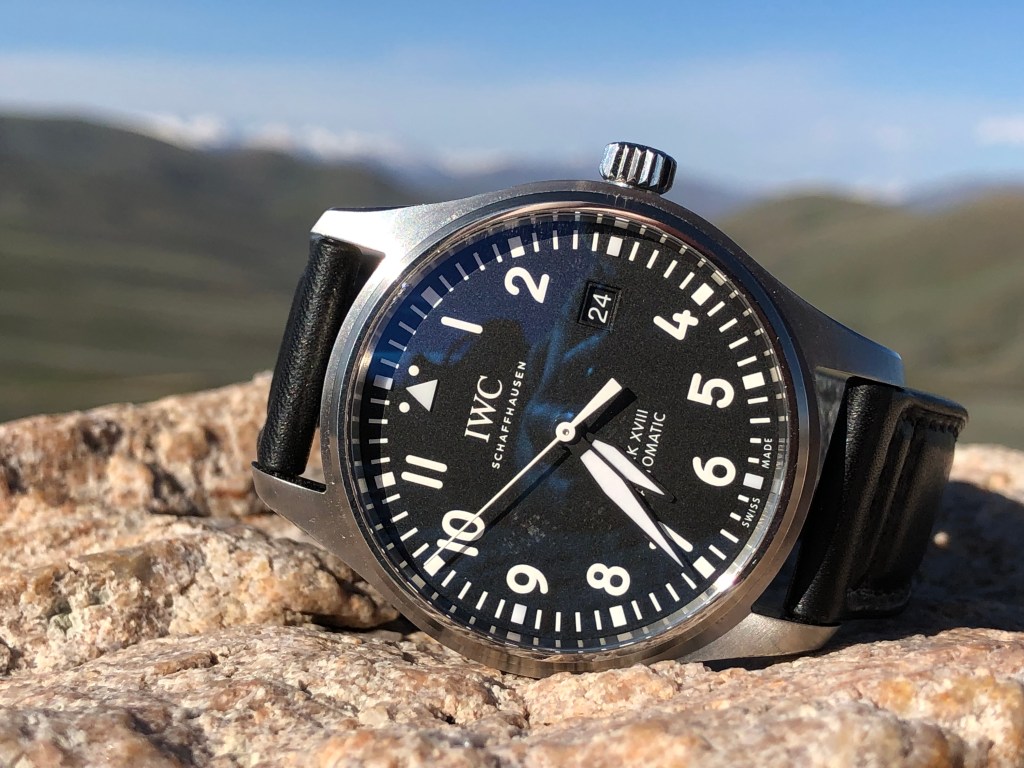
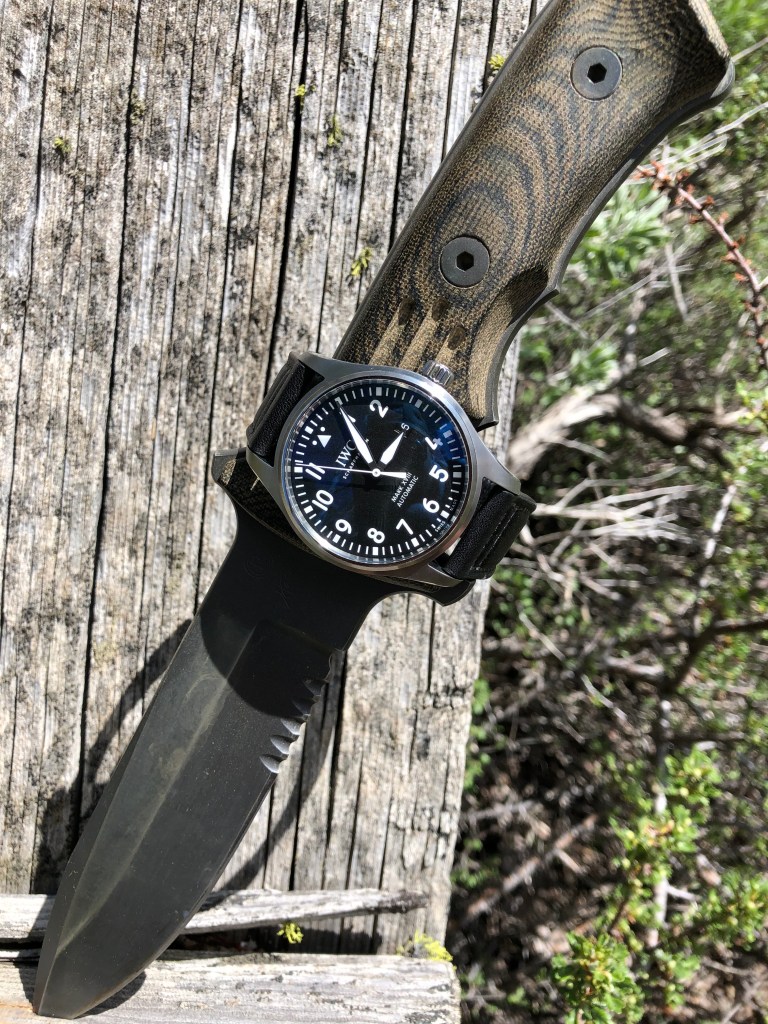
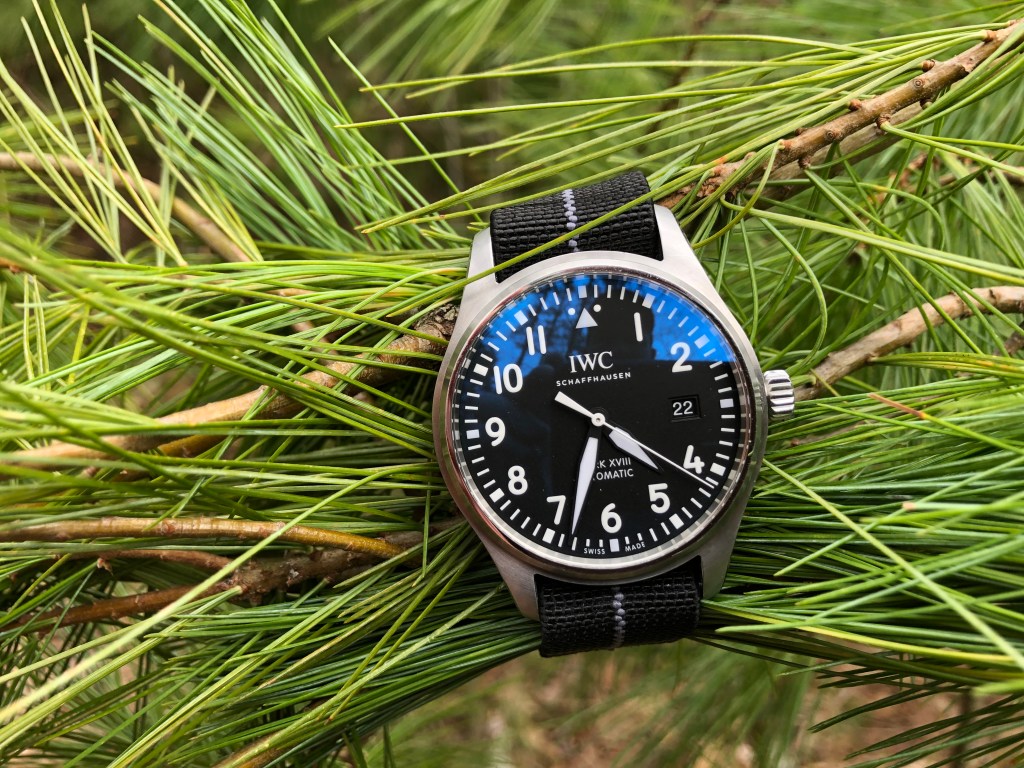
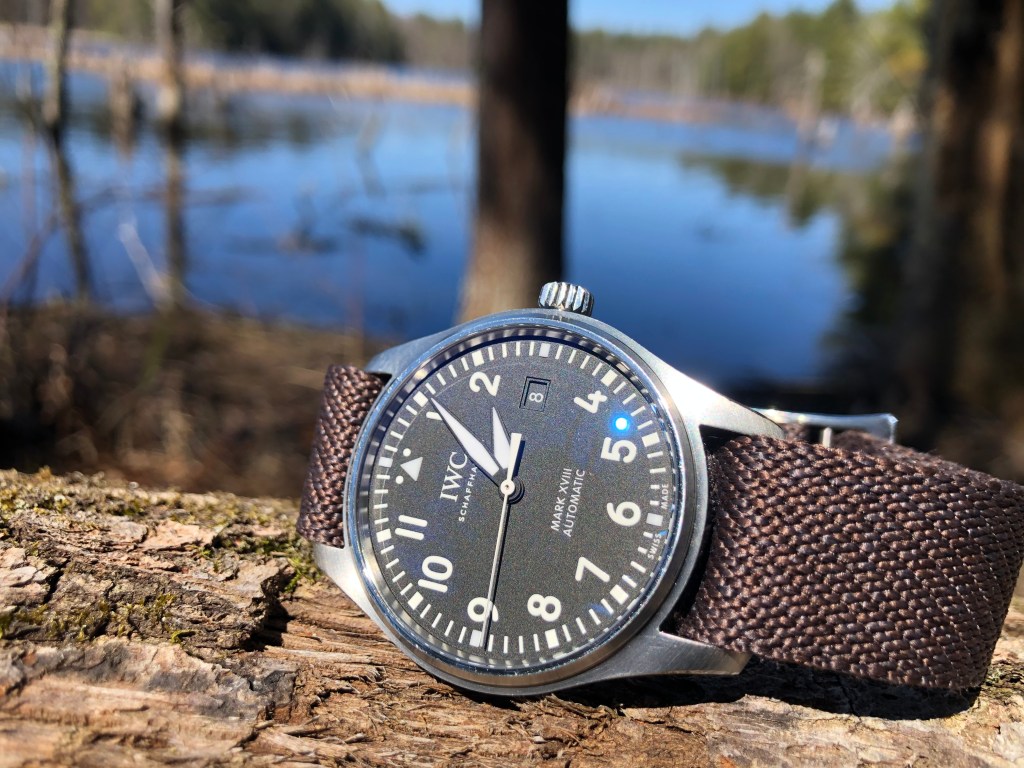
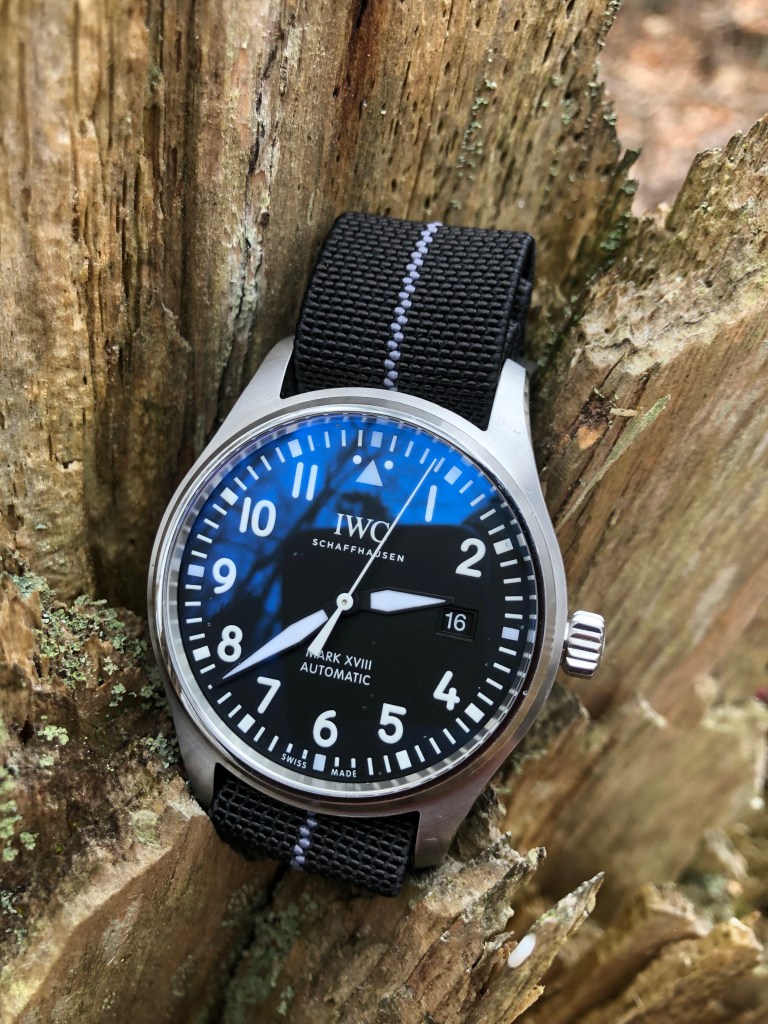
The diameter of 40mm is perfect for all-day wearing comfort, although the lugs are a little long. The 11mm thickness is superb, and when I need to wear gloves, the watch slips under them easily. In the case’s finishing, this Sellita-equipped watch stands above its peers like my Formex. The case is brushed except for a small polishing strip on the lugs’ top side, which is something that most of the less-expensive watches out there cannot match—a nice touch. The brushing is uniform throughout the entire watch. There are no deviations in the finishing quality that I can see, even under magnification. It is a very well-made watch.
The Sellita SW300-1 movement is loud when the rotor moves, although I cannot hear it when walking around. If I shake the watch at home when it is quiet, I can listen to the rotor moving around within the case. It seems like a solid movement. It has a 42-hour power reserve, something I verified through testing. The iron dial (part of the iron anti-magnetism scheme they use on these watches) is uniformly finished, and the markers and writing are well applied. The lume works well all night, even if it is fainter in the early morning than my Top Gun Chrono or Top Gun time-only watches.
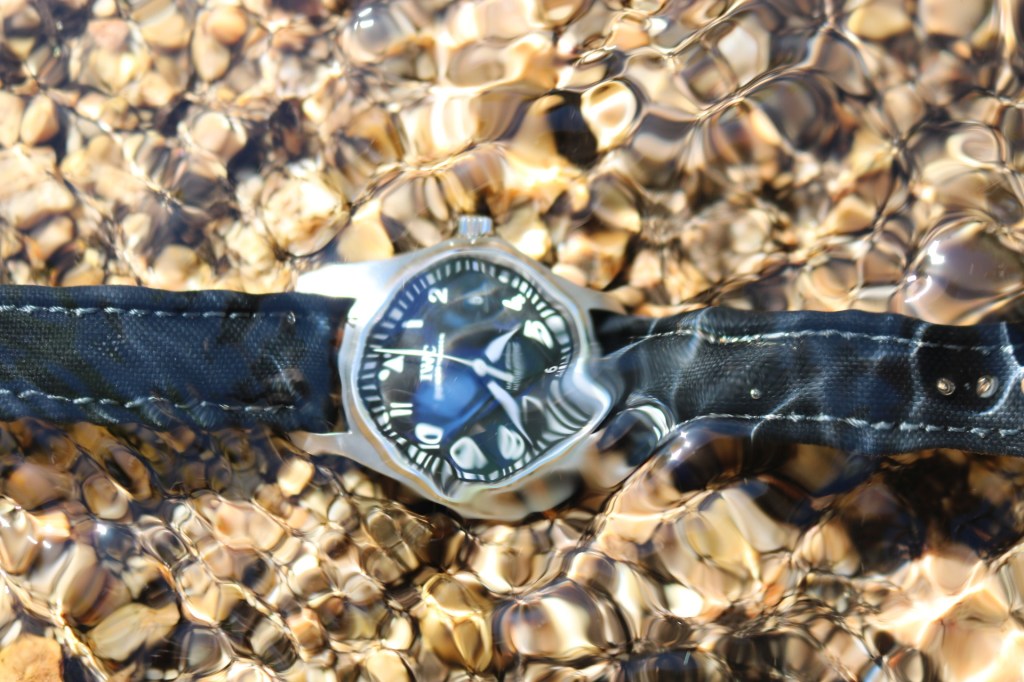
The 60-meter water resistance is adequate for my use; I frequently shower and swim in the rivers and hot springs with the watch on, but I never plan on diving with it. I have no complaints about its weight. And it kept time to +3 seconds a day. Every single day. Yet, I was underwhelmed by it and found it challenging to connect with it emotionally. Whatever excitement I had felt when receiving the watch initially faded away; when I got home, I cleaned the sweat off and put it away.
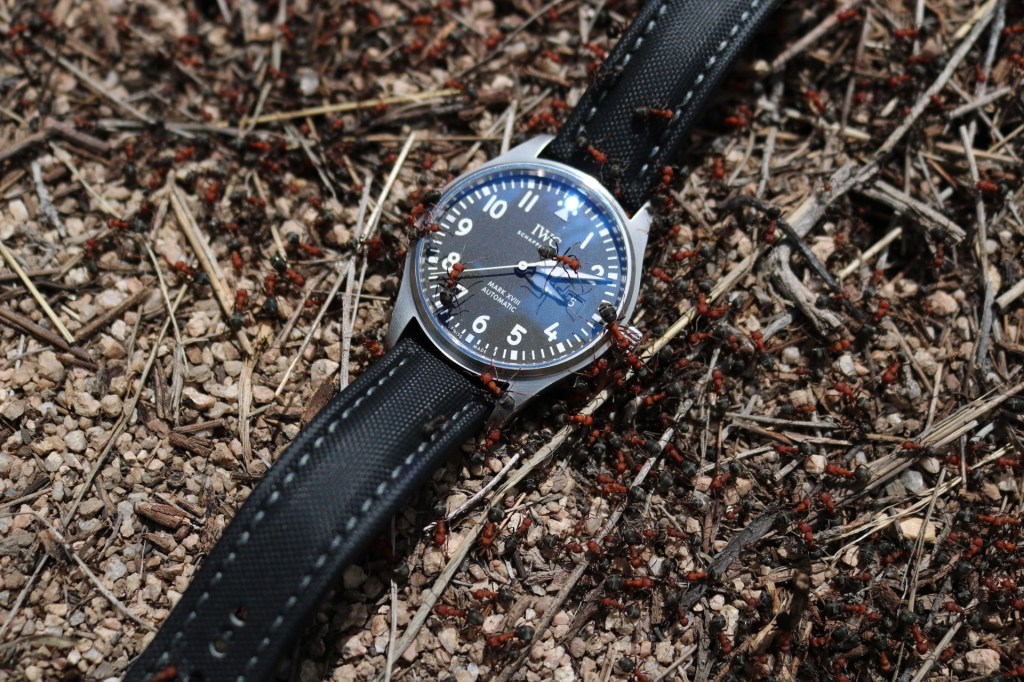
About eight months later, I again pulled it out of the case and tried it on. I had just had it shipped back to me from a friend and had not worn it since receiving it. I was living in the Boston area now; there were very few options to explore with it. However, it brought back my desire to explore. I put it on a green NATO strap, pulled out my maps, and began dreaming of a time and place where I was not crammed into a small apartment with few opportunities to go outside and no sunlight to enjoy. The watch started running slowly shortly after I started wearing it again, about 6-8 seconds slow daily. Perhaps it needed some wrist time to return to its prior performance levels. So I wore it out as often as possible in New England to try and get it to return to its old level of performance.
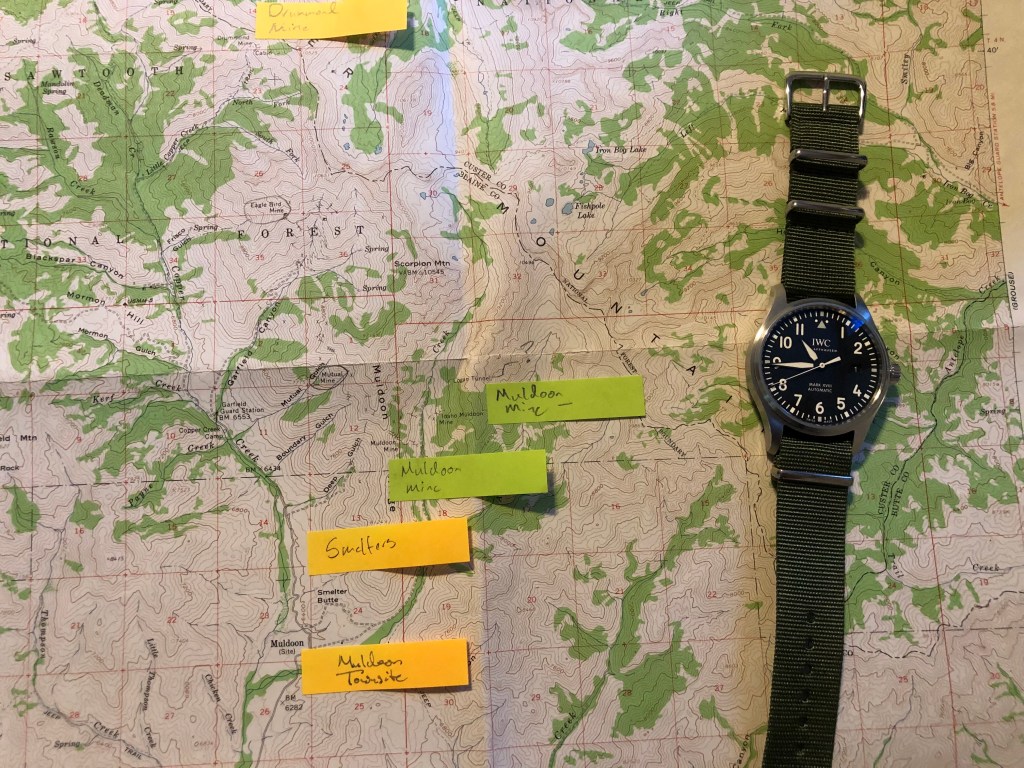
I tracked its timekeeping obsessively for a few months and found it always stayed the same. It was constantly 6-8 seconds slow daily. Eventually, I gave it up and decided to set the watch a few minutes fast and only check it every few weeks. With this approach, I became less concerned with its timekeeping and the timekeeping of all my other watches. Yet I found it still bothered me a little, and I wanted to see if I could get it fixed while it was still under warranty.
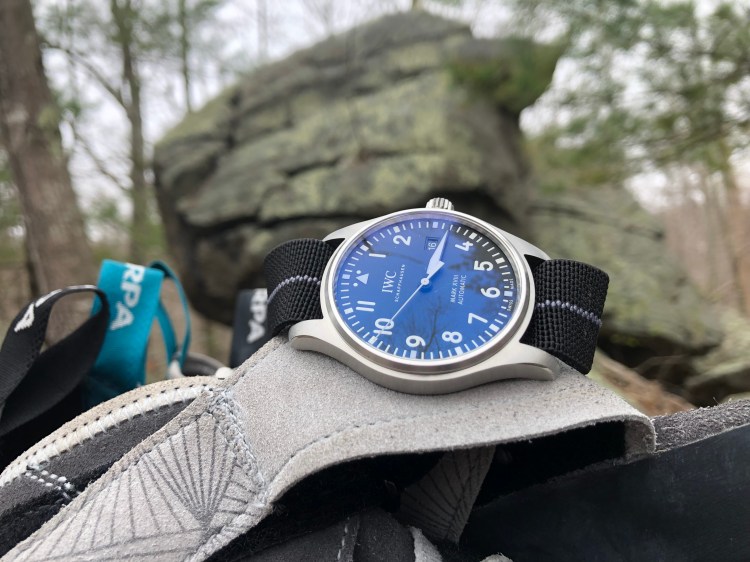
I contacted IWC to see if they thought this performance was typical. They told me it wasn’t and that I should ship it back to them to have it inspected. The customer service representative told me they would send me the packaging supplied for me to ship the watch to them. I had them send all the stuff to my new house in Idaho and decided to wear the Mark XVIII on the cross-country drive.
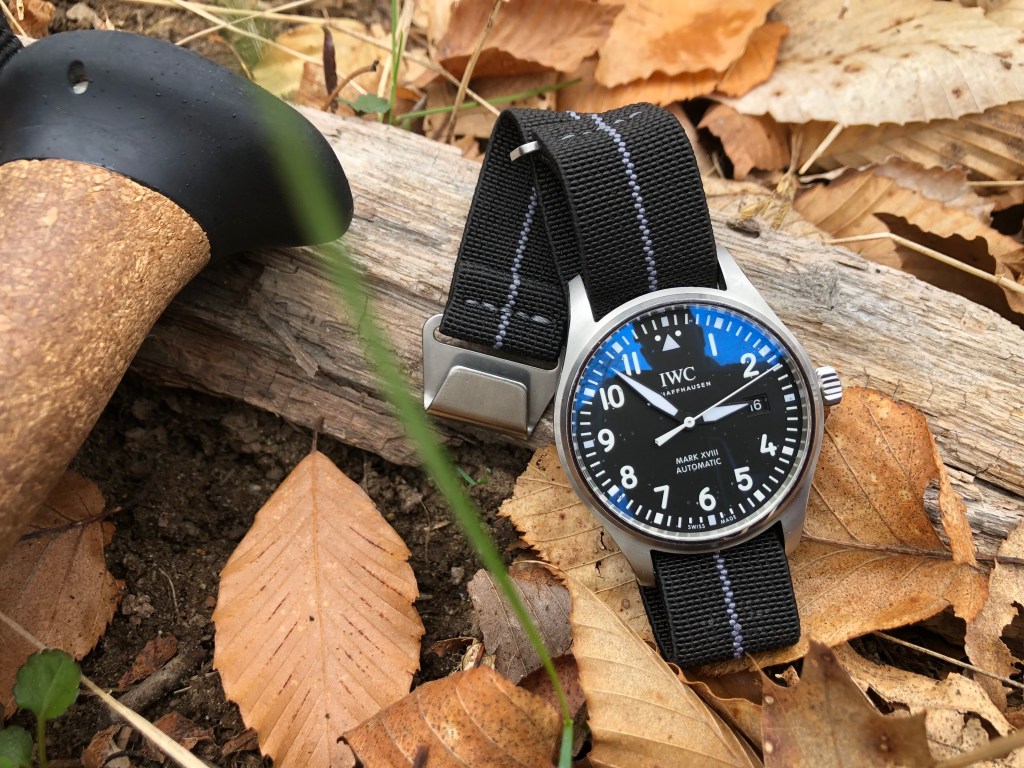
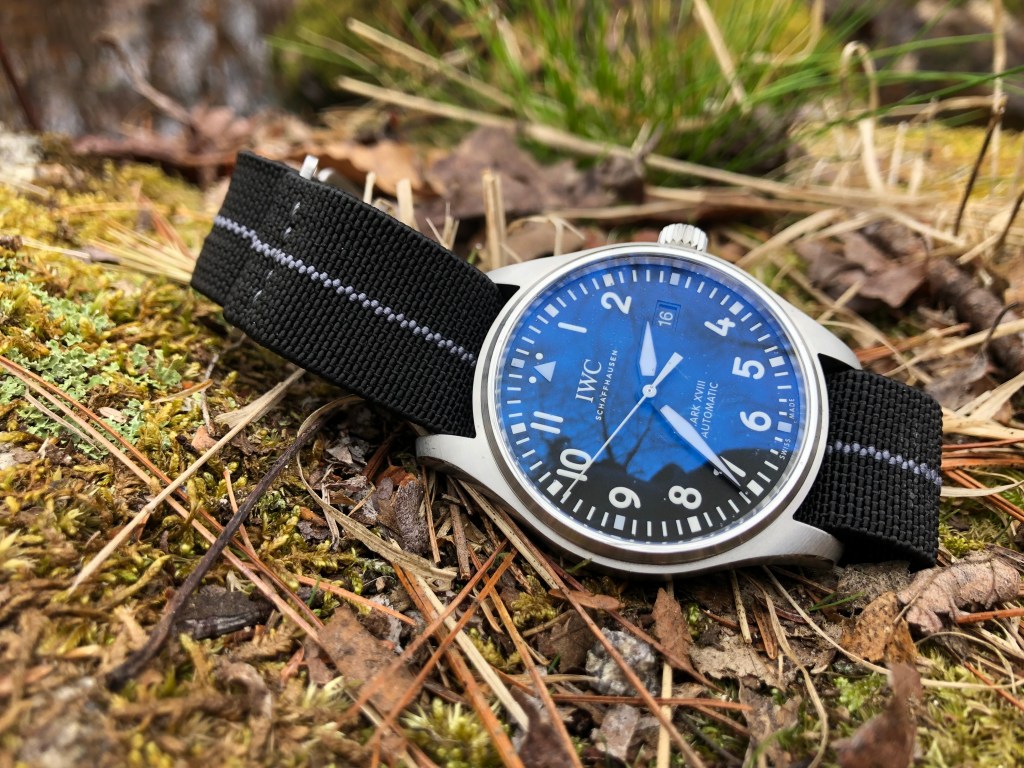
It was a great watch to wear on a 2,600-mile U-Haul journey. It was never uncomfortable. I wore it on a 21mm Artem strap from another watch, which was great. I liked looking at it as I was driving through Nebraska and Wyoming. It was my countdown tool. Every hour elapsed was another hour closer to home. It will always be a special watch for me because of this journey, and I enjoyed having it with me for the drive.
When I arrived at my new house, the package from IWC was waiting. Inside it was everything I needed to ship the watch to them, free of charge. The only “issue” was that expanding foam box took a day to pop up to the size needed to place the watch in it. After taking some photos, I put the package together, applied the shipping label, enclosed the warranty card, and dropped it off at my FedEx store, expecting it to take a few months.
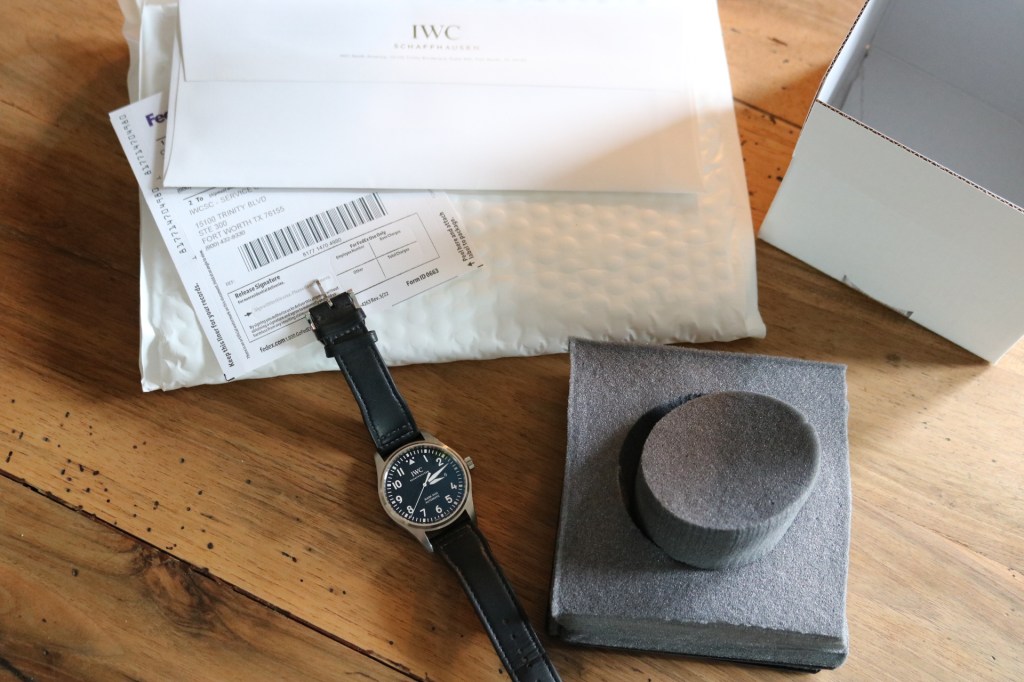
I never received any information from IWC concerning the package. I checked the tracking number online and saw that it had been delivered. I figured they were busy and that once they looked at the watch, they would get in touch. For two weeks, I heard nothing, and then in the afternoon on a Wednesday, I got a text message saying I had a FedEx package coming. I checked it and saw that it was from IWC. A day later, the watch was in my hands (it was delivered as I wrote this).
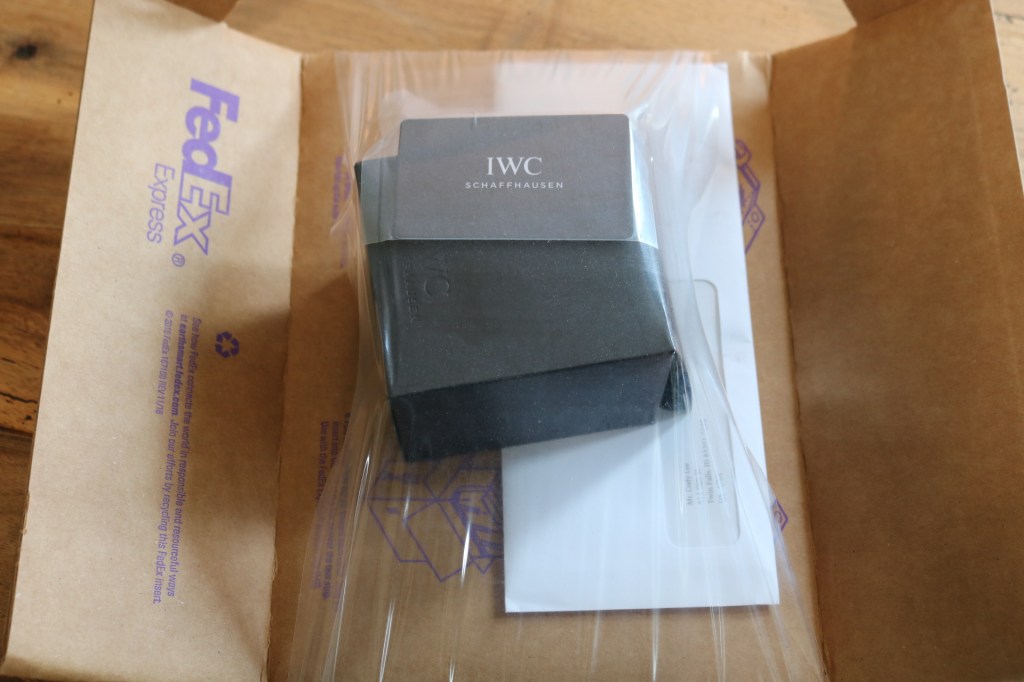
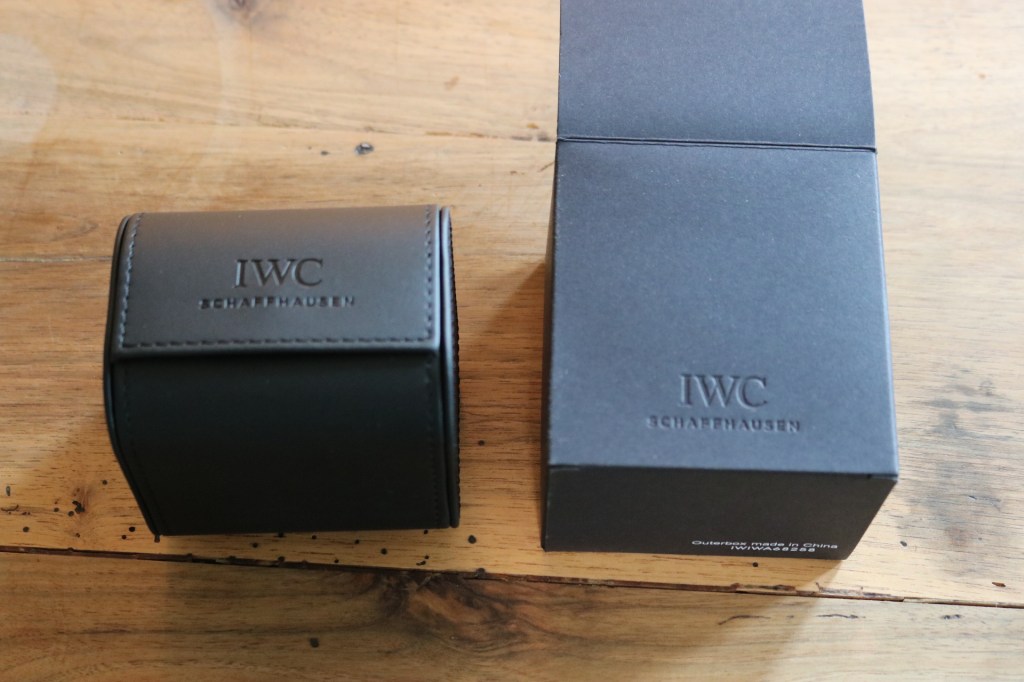
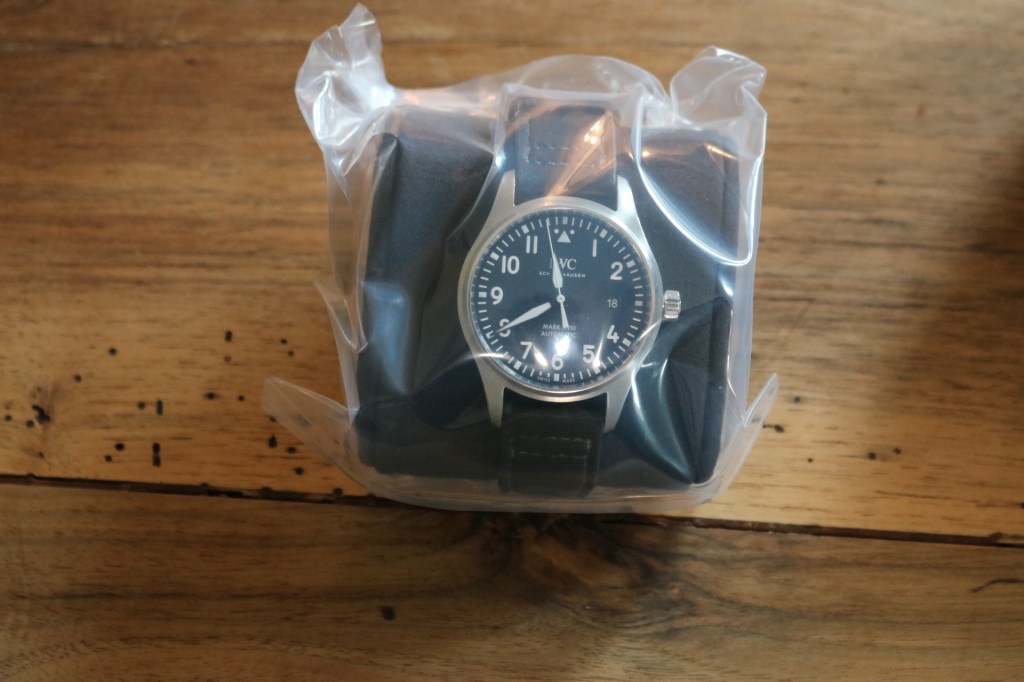
It came in a new IWC watch box with the warranty card attached to the front. It isn’t just a cardboard box, but one of the premium ones they give you when you first buy the watch. Inside was the service warranty paperwork and a thank you note for being an IWC customer. The total bill? $0.00. They did not charge me for the work (timekeeping regulation and inspection). I am impressed with the customer service. Right now, it seems to be keeping excellent time, at about +4 seconds a day, and I am pleased with the work. I will take it climbing and hiking soon and see how it works. Even after many hard, sweaty uses, the leather strap still looks excellent. I guess the mania over the fragility of leather straps does not extend to IWC straps. I have worn it on many other straps: Erika’s Original, Artem, some cheap NATOs, a Crown and Buckle Chevron, and an IWC NATO. It works great on all these straps, and I do not have a favorite; it depends on the day and my mood.
I am glad I held onto this watch for the year, as it took this long to accept it for what it is. I feel a bond to this watch now, one I would not have thought was possible initially. This is proof (at least in this singular instance) that sometimes it takes more than hype to bond with a watch. It takes time, life experiences, and some openness to accept it. I will hold onto it for a while longer. If you want one, they are worth the search to find. You won’t be disappointed.
 EscapementSV
That was an outstanding article!!
I just read the whole thing and was fascinated
Good job!!
It will be interesting to see what they say about the ceramic one
Doug Lee
Norton Ranch Homes
doug@nortonranchhomes.com doug@nortonranchhomes.com
O: 541 728-0378
C: 541 480-9554
http://www.nortonranchhomes.com/ http://www.nortonranchhomes.com
LikeLike
great watch, personally i think it’s one of the best all round watches, the beauty is in it’s simplicity
LikeLike